For people seeking asylum or rebuilding their lives in a new country, finding safety does not necessarily mean finding belonging. Social isolation, uncertainty and exclusion can make it difficult to establish connections with people and place.
Research led by Professor Katherine Johnson brought together expertise to explore whether spending time together in nature could help create those connections. Professor Johnson’s team included Honorary Professor Sarah Bekessy and Dr Nerkez Opacin.
The study formed part of RECETAS (Re-imagining Environments for Connection and Engagement: Testing Actions for Social Prescribing in Natural Spaces), a five-year, €5 million European Union Horizon 2020 project examining whether nature-based social prescribing can reduce loneliness and strengthen wellbeing.
Social prescribing connects people with community activities and services that can support their health and wellbeing alongside traditional healthcare.
RECETAS brought together 13 institutions across nine countries. The Melbourne program, Friends in Nature, was adapted from the Finnish Circle of Friends approach. Its distinctive feature was its focus on LGBTQIA+ refugees and asylum seekers.
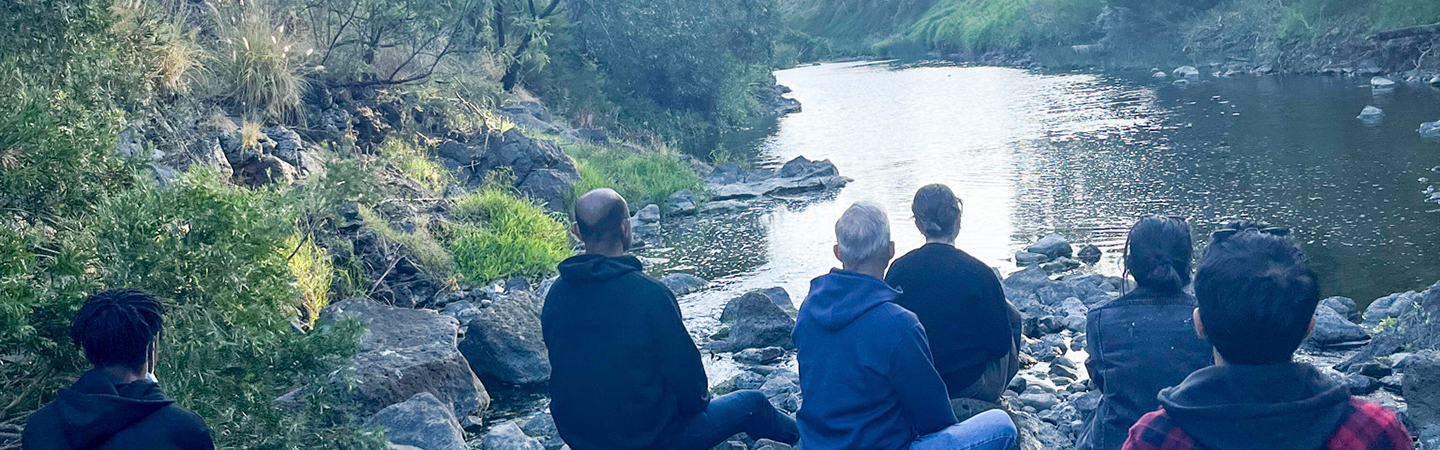
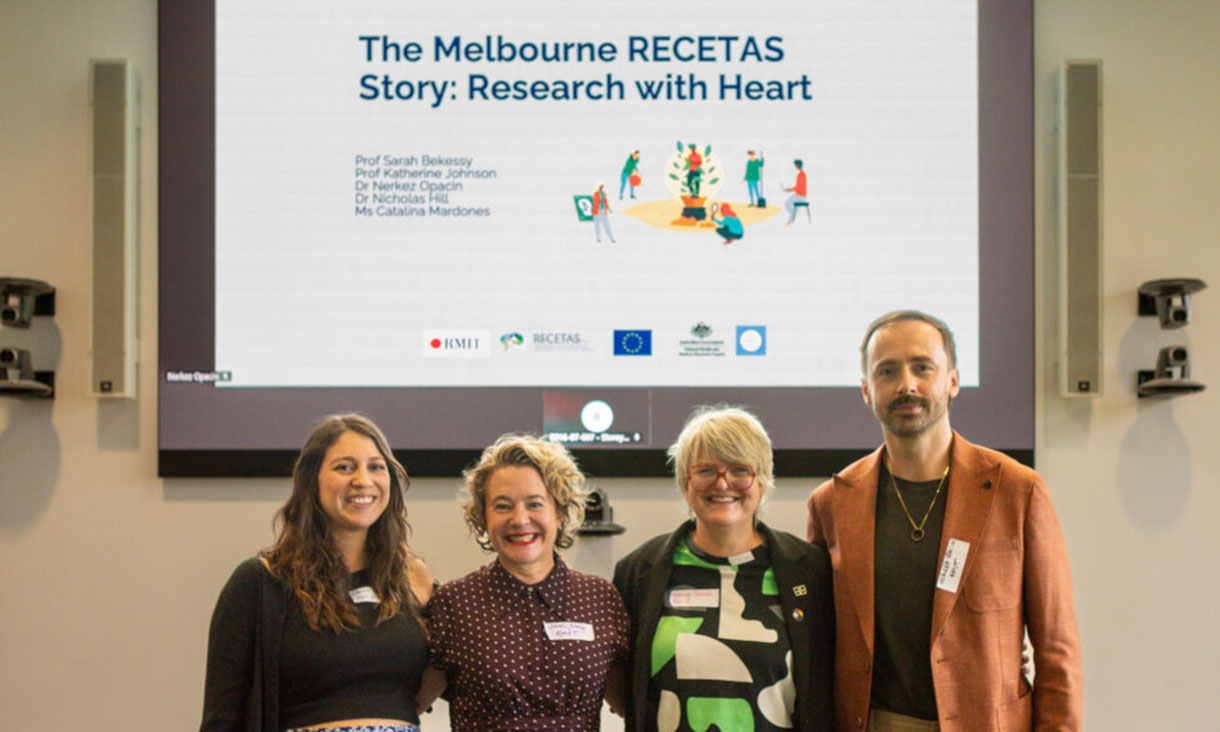
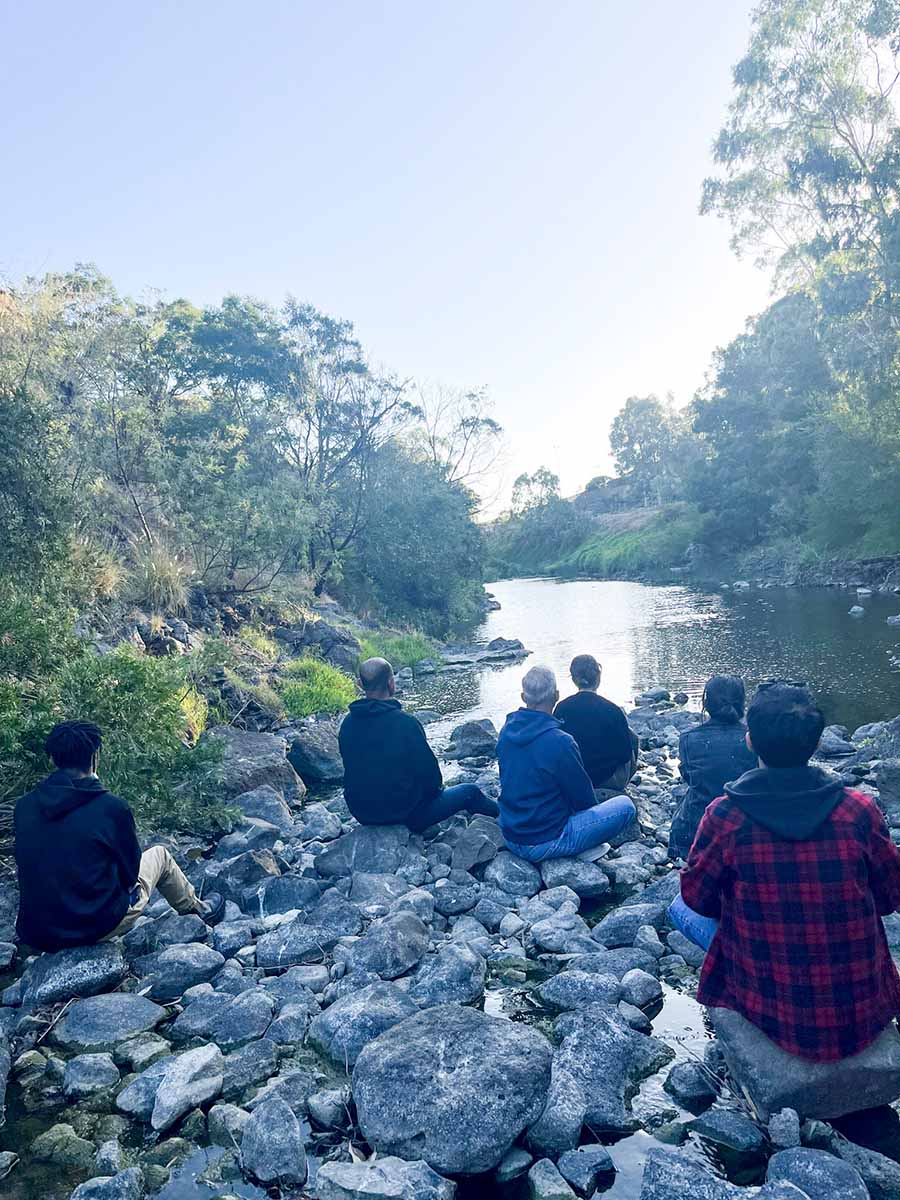 Photo by Nerkez Opacin
Central to the Melbourne study was RMIT's partnership with Many Coloured Sky, an organisation supporting LGBTQIA+ refugees and asylum seekers. Its established relationships with the community helped shape the program’s recruitment and activities.
The research also involved an advisory group with representatives from the Victorian Department of Health, City of Melbourne, Parks Victoria and community organisations.
Thirty-seven participants met in groups, supported by two facilitators. Over eight weeks, they visited natural settings ranging from Yarra bushland and Port Phillip Bay wetlands to city parks, where they gardened, shared meals, walked mindfully, watched wildlife and spent time together.
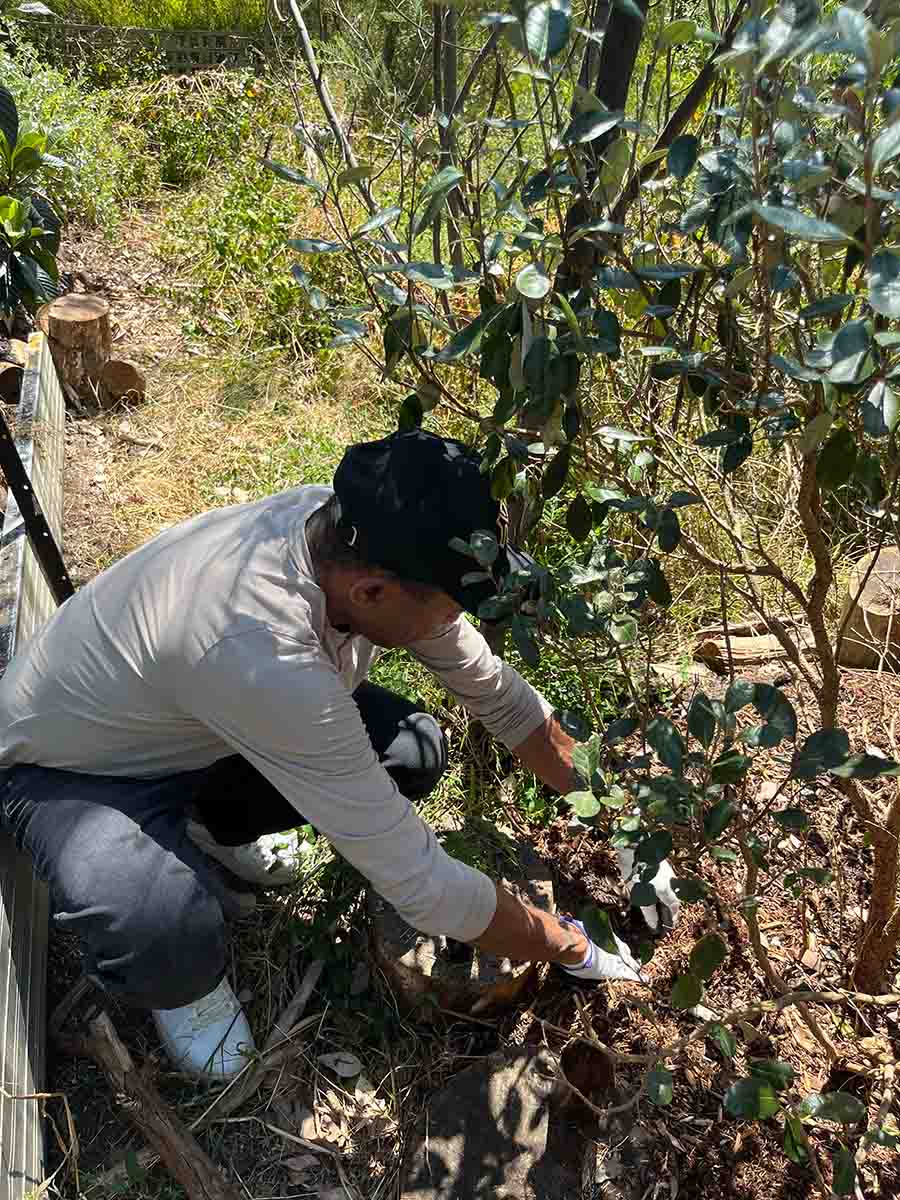 Planting native plants in Eltham. Image by Nerkez Opacin.
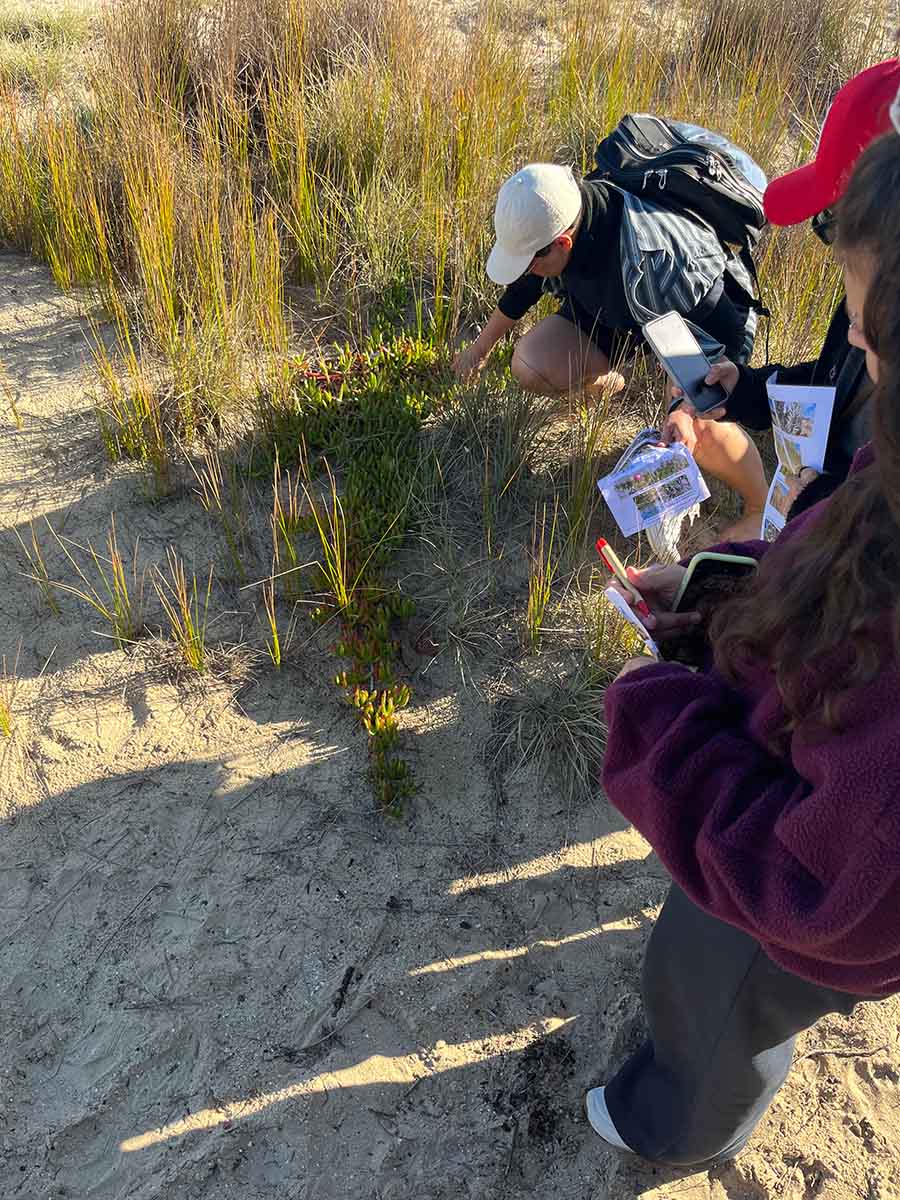 Playing a detective game while exploring plants. Image by Nerkez Opacin.
Drawing on Honorary Professor Bekessy's expertise in biodiversity and the relationship between people and natural environments, the Melbourne study explored how different natural environments shaped participants' experiences and sense of belonging. For people newly arrived in Australia, the program raised questions about connecting with unfamiliar landscapes and developing a sense of place, while being exposed to the unique qualities of living on Country.
Following the program, participants reported reduced loneliness and increased connection with nature. They formed friendships, became more confident speaking in groups and began exploring unfamiliar parts of Melbourne and beyond independently.
According to one participant:
‘In nature, nobody judges you. It felt safe, gentle, calm.’
Another reflected:
‘I have finally found my community, my chosen family and a place I hope to call home.’
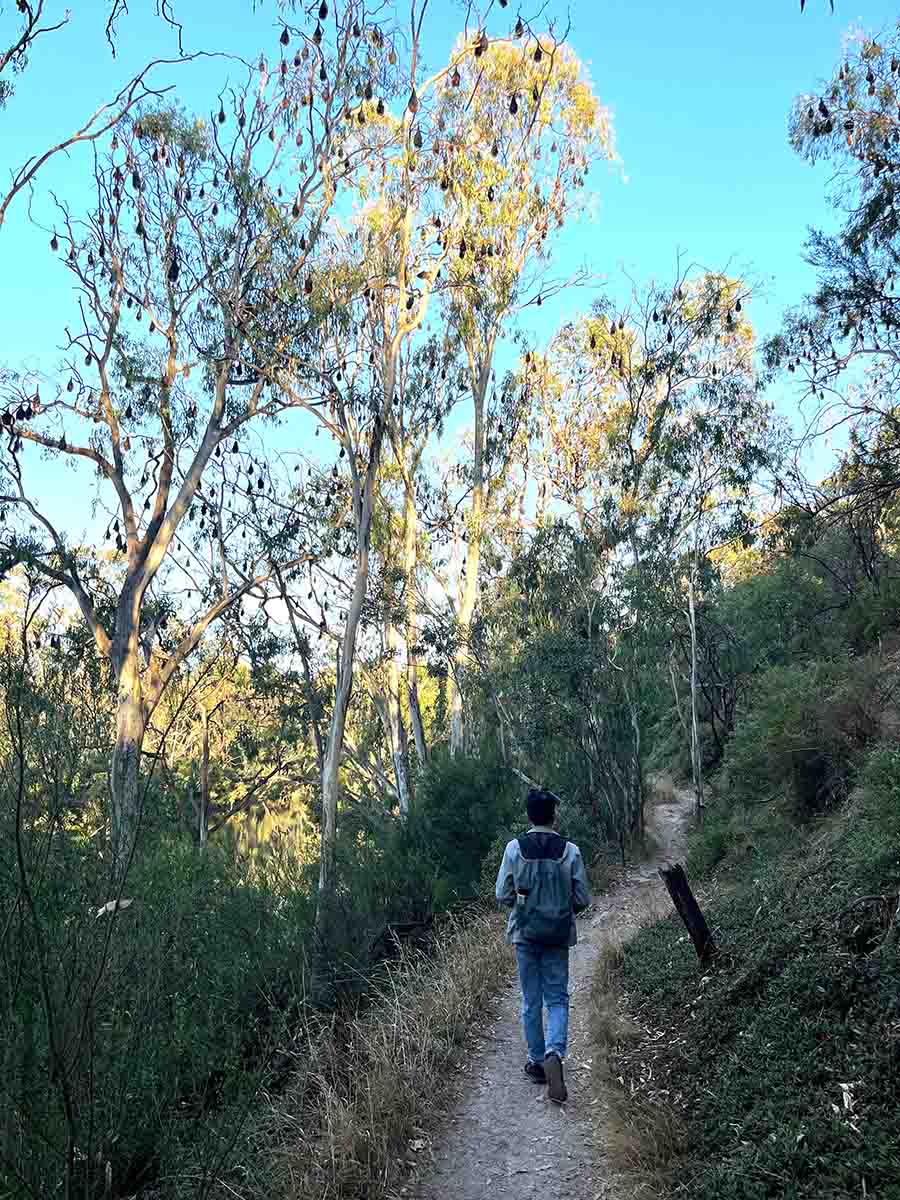 Photo by Nerkez Opacin
For Dr Opacin, some of the most meaningful changes were those observed beyond the formal measures and surveys.
‘Some of [the participants] have had improvement in quality of life. Most significantly was seeing what happened beyond those measures: seeing them becoming more confident and speaking up in a group context.
‘People with low self-esteem because of their situations have become more confident navigating through Melbourne and out to nature on their own and beginning to feel that Melbourne could belong to them as well,’ said Dr Opacin.
The researchers have also maintained relationships with some participants beyond the formal study.
Reflecting on their personal journey with RECETAS, Professor Johnson and Dr Opacin said the international collaboration gave them a similar opportunity to build relationships and experience new places and ways of connecting with nature.
As Professor Johnson reflected:
‘It's really interesting that the impact on the participants was the same for the researchers as well. We were able to go to foreign places and were supported to go out and stretch the boundaries of what we might do.’
The impact continued beyond the eight-week program.
Some participants became peer facilitators, helping create similar experiences for others. Many Coloured Sky has also continued its own version of Friends in Nature, adapting it to the needs and capacity of its community.
For the RMIT team, this was an important outcome. Rather than creating a program dependent on researchers, the aim was to leave skills and experience within the community so the approach could continue and evolve without the researchers.
‘We are not simply replicating RECETAS. We are testing what needs to change in different populations and geographical contexts, how local organisations can be involved, how facilitators can be trained locally. And then ultimately, how Friends in Nature could be community-supported rather than dependent on a research team,’ said Dr Opacin.
Participants also helped communicate the research. Their photographs and reflections on nature, safety and belonging were shared in the exhibition Through Our Eyes: Many Coloured Sky Reflections from Melbourne at RMIT's 2025 Nature Prescription for Community Wellbeing event for World Mental Health Day.
The RECETAS project concluded in mid-2026, but the Melbourne work is continuing.
Friends in Nature is now being adapted for culturally diverse young adults aged 18 to 25 through the City of Casey's Connecting Communities Living Lab, led by Dr Nerkez Opacin. Local facilitators are being trained, with the longer-term aim of influencing other community organisations to adopt and support the program.
RMIT PhD researcher Catalina Mardones Martinez is also building on RECETAS. Combining ecology and social research, her analysis of global data has highlighted the importance of designing inclusive urban green spaces that work for migrant communities.
 Source: RECETAS website
The research has revealed that what matters is creating the social conditions for connection within nature. Accessible urban green spaces such as parks, waterways and wetlands can provide places where those connections can happen.
As Dr Opacin said, ‘We see future impacts on several levels: individual wellbeing and belonging, how communities use and feel about their local green spaces, and how councils, health services and community organisations think about nature as part of a social infrastructure.’
The Melbourne study contributes to RECETAS' wider international effort to explore how nature-based social prescribing could support more community-centred approaches to health and wellbeing. Professor Jill Litt, who leads the international RECETAS project from the Barcelona Institute for Global Health, sees the potential for the approach to contribute to a different model of care:
‘If RECETAS is successful, this can really change the model of care to be more person-centred, to rely less on pharmaceutical interventions, and to utilise our communities as part of the way health is managed.’

Dean, School of Global, Urban and Social Studies

An early fault detection (EFD) system invented at RMIT University is helping to prevent bushfires and blackouts in North America, Europe and Australia.
RMIT researchers developed the Australian Urban Observatory, a groundbreaking digital platform that provides detailed insights on urban liveability for developing sustainable, inclusive, and healthy cities.
Reducing residential speed limits from 50 kilometres per hour to 30kph would significantly boost bicycle riding safety without majorly affecting car trip times, an RMIT University study found.

RMIT research is improving access to essential services for culturally and linguistically diverse LGBTIQA+ communities while transforming professional practice for Australia's translators and interpreters.
If you're not sure how you can best work with us, our team can explain what's possible and put you in touch with the right person.


RMIT University acknowledges the people of the Woi wurrung and Boon wurrung language groups of the eastern Kulin Nation on whose unceded lands we conduct the business of the University. RMIT University respectfully acknowledges their Ancestors and Elders, past and present. RMIT also acknowledges the Traditional Custodians and their Ancestors of the lands and waters across Australia where we conduct our business - Artwork 'Sentient' by Hollie Johnson, Gunaikurnai and Monero Ngarigo.
Learn more about our commitment to Aboriginal and Torres Strait Islander peoples