




Improving fungal infection detection and control for immunocompromised cancer patients

Improving fungal infection detection and control for immunocompromised cancer patients

An RMIT research team partnered with clinical, research and data organisations to develop and implement an AI-powered surveillance tool, improving how invasive fungal infections are monitored in cancer patients.

Key points

  • RMIT researchers collaborated with the Peter MacCallum Cancer Centre, The University of Melbourne, BioGrid Australia, and the Royal Melbourne Hospital to develop the AI-powered tool called EINSTEIN AI.
  • The tool uses natural language processing and machine learning to scan medical reports, flag potential or existing infections, and support faster, more reliable hospital-wide surveillance.
  • The project links doctors, researchers, computer and data science experts and software developers to help infectious disease teams monitor infection risks across the hospital and was named a finalist in the community engagement category of the 2026 AFR AI Awards.
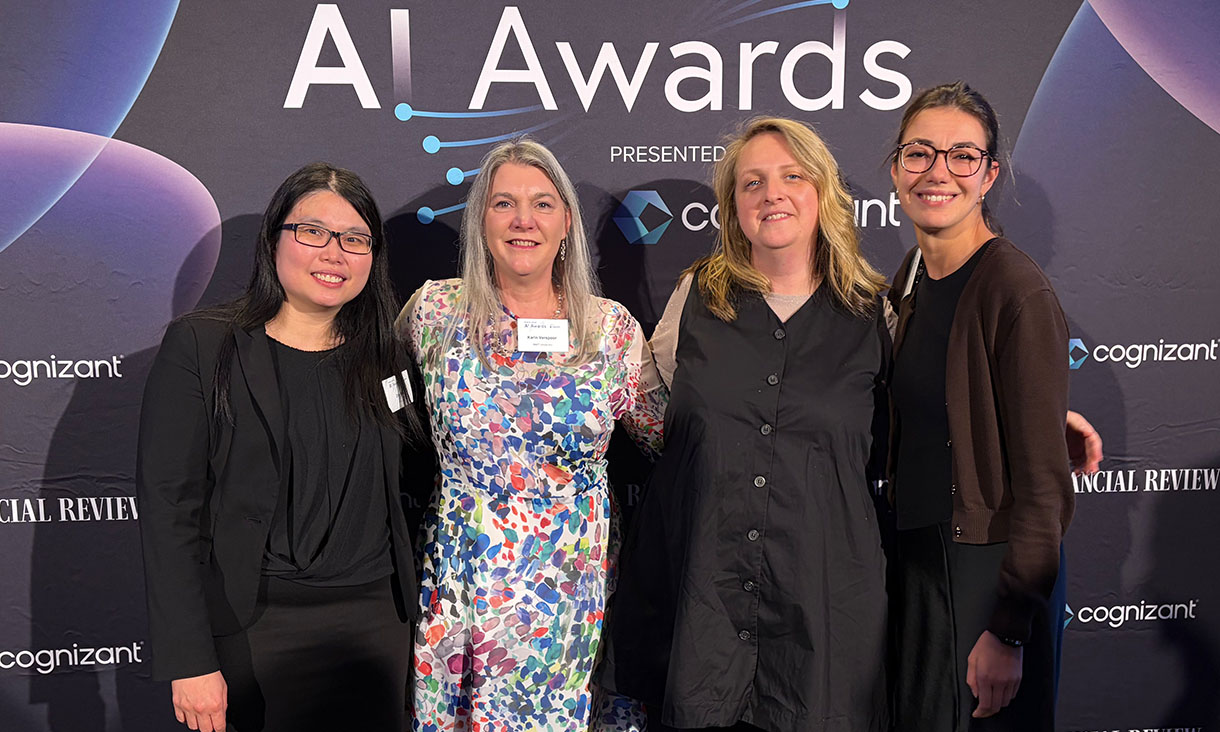
Part of the team behind the AI tool, which was a finalist in the 2026 AFR AI Awards in the community engagement category. Image: Aeden Ratcliffe, RMITPart of the team behind the AI tool, which was a finalist in the 2026 AFR AI Awards in the community engagement category. Image: Aeden Ratcliffe, RMIT

Invasive fungal infections (IFI) are a rare but serious infection that typically occur in patients who are undergoing treatment for blood cancers such as acute leukemia. Such infections can infiltrate the lungs and other body parts, further compromising patients’ health, increasing mortality rates and delaying cancer treatments. These infections are challenging to diagnose and require diagnostic imaging and bronchoscopy. Antifungal therapy is expensive and limited to a few available agents.

Most healthcare facilities are not able to routinely identify and monitor IFI as the complex nature of case definitions has meant that traditional surveillance methods have been manual, resource-intensive, prone to error and time-consuming.

A more efficient and reliable process for monitoring infection outbreaks, identifying emerging risks and assessing the effectiveness of interventions is vital.

The RMIT research team led by Distinguished Professor Karin Verspoor, Dean, School of Computing Technologies, worked with researchers from the Peter MacCallum Cancer Centre and the University of Melbourne to develop an automated surveillance system. The team utilised AI techniques including natural language processing (NLP) to analyse medical reports and develop algorithms to extract relevant information about potential or existing fungal infections.

The challenge of identifying fungal infections in medical facilities

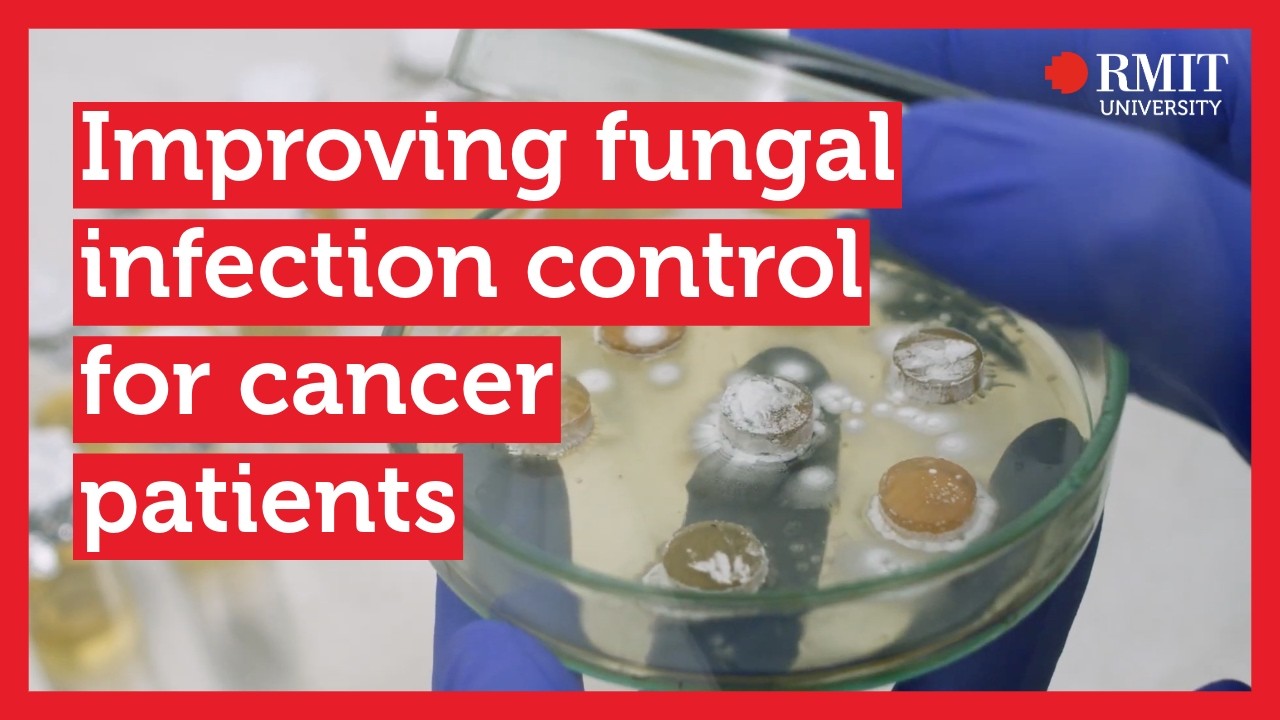
Fungal-Infection-Thmb.jpg

Verspoor said collaborators were keen to use data more effectively to support clinical decision-making and enhance infection control.

“Given the patients are being treated with strong drugs or treatments such as radiotherapy or chemotherapy to try and kill the cancer, the rest of their body becomes weaker too, making them particularly vulnerable to infection,” she said.

“Infection control in these places has posed a significant challenge, particularly because antifungal drugs can also cause severe side effects, and many patients were being treated for potential infections as a preventative measure.”

Verspoor said that gaining proof of infection has been complex, involving biopsies or scans, with histopathologists or radiologists writing up their observations following these procedures.

“These reports are all then sent to clinicians, who can end up with a lot of paperwork. This process can make it difficult to quickly identify individual patients with infections and for controlling infection across the entire hospital population,” she said.

Research approach

The team’s research focused on using AI natural language processing techniques to help classify histopathology, CT scan and other reports to flag instances of invasive fungal infection.

Verspoor said that working with clinicians from the Peter MacCallum Cancer Centre, they identified language in existing reports that was indicative of an invasive fungal infection.

“We then built a system that tried to capture those features and characteristics of the documents, and a natural language processing tool that could automatically read the reports and classify cases into three categories of ‘positive’, ‘probable’ or ‘possible’ infections,” said Verspoor.

“The clinicians were not only interested about reports at the individual level, but also keen to know what was happening across the hospital and to look retrospectively at trends.

“Our clinical AI tool EINSTEIN AI now powers a dashboard, designed in collaboration with Royal Melbourne Hospital and implemented into the clinical environment with support from BioGrid Australia, to give infectious disease teams greater situational awareness across the hospital.”

Research outputs impact

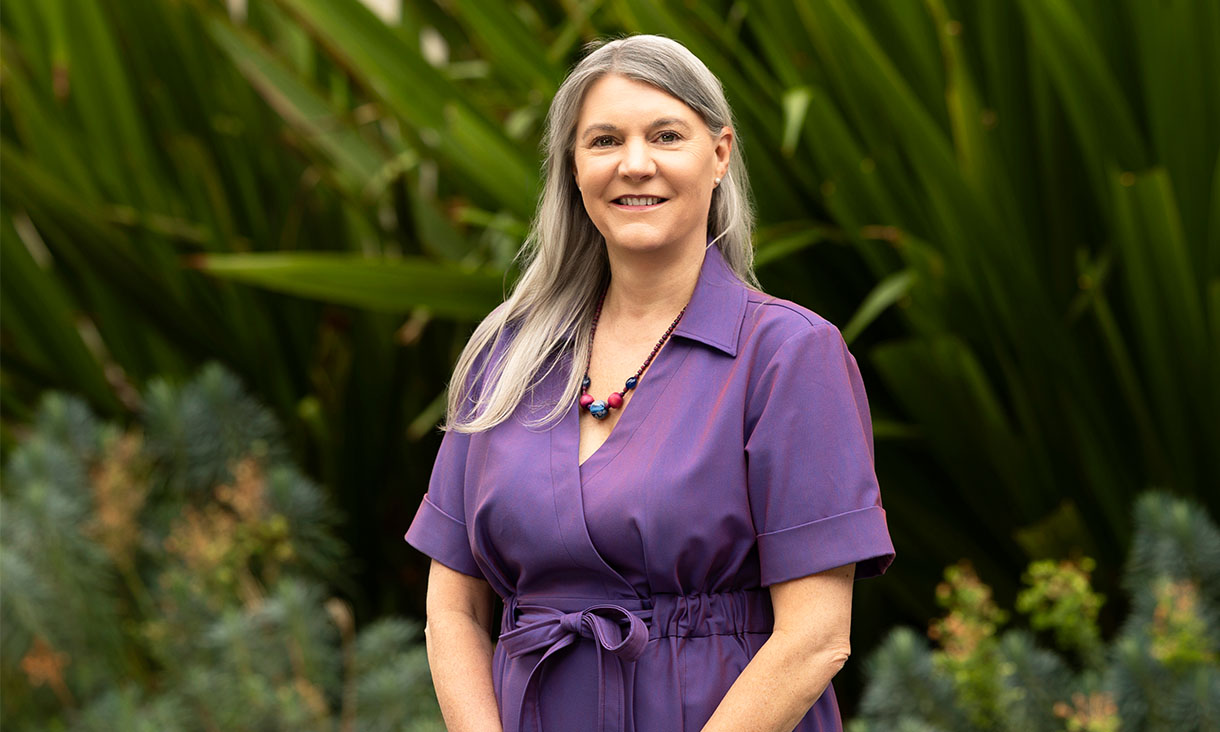
Distinguished Professor Karin VerspoorDistinguished Professor Karin Verspoor

The initial AI system developed for invasive fungal infections has led to a larger Medical Research Future Fund (MRFF) grant which will extend the program to other infections that occur in immunocompromised patients.

“The aim of the system is to minimise the time and resources required to conduct IFI surveillance by automatically flagging patients that are likely to have had the infection,” said Verspoor.

“Given its strong performance, our tool will play a key role in identifying these patients for detailed clinical review,” she said.

“The information about infections can now be obtained much faster and by pulling everything together in a system that's integrating information from all these different sources, allows for a more comprehensive and holistic view of what's happening across the hospital.”

Professor Karin Thursky, Project Lead from the Peter MacCallum Cancer Centre said: “The development of the Invasive Fungal Surveillance System was a terrific collaboration between clinicians working with these high-risk patients and data scientists.

“We know that the co-design of the algorithms and data visualisation will lead to better prevention and management of these infections,” she said.

Read the News story here: Data experts, cancer specialists, unite to build AI infection-detection

‘Detecting evidence of invasive fungal infections in cytology and histopathology reports enriched with concept-level annotations’ is published in the Journal of Biomedical Informatics (DOI: 10.1016/j.jbi.2023.104293)

Funding

NHMRC Project Grant GNT1156426 (Chief Investigator: Thursky): “Meeting the Challenges of Invasive Fungal Infection: Antifungal Stewardship and Effective Surveillance in High-Risk Groups.”

Acknowledgements

Vlada Rozova, former Research Fellow at RMIT was a key contributor to the technical development of the tool. Anna Khanina, Jasmine Teng, Joanne SK Teh all contributed critical clinical expertise for data interpretation and annotation. Professors Leon Worth and Monica Slavin from Peter MacCallum are co-investigators with Professor Karin Thursky.

It was developed over four years as a result of collaboration involving multiple people and parties – RMIT University, the National Centre for Infections in Cancer at Peter MacCallum, the University of Melbourne, the Guidance group at the Royal Melbourne Hospital, and BioGrid, a not-for-profit company owned by the Australian medical research sector that provides a national data platform.

Organisations interested in partnering with RMIT University can contact research.partnerships@rmit.edu.au.

Key contact

Professor Karin Verspoor

Professor Karin Verspoor

Dean, School of Computing Technologies

SDGs

SDG 3 Good Health and Well-being
SDG 17 - partnerships for the goals

Read related RMIT impact stories


Connect with RMIT Research

If you're not sure how you can best work with us, our team can explain what's possible and put you in touch with the right person. 

aboriginal flag float-starttorres strait flag float-start

Acknowledgement of Country

RMIT University acknowledges the people of the Woi wurrung and Boon wurrung language groups of the eastern Kulin Nation on whose unceded lands we conduct the business of the University. RMIT University respectfully acknowledges their Ancestors and Elders, past and present. RMIT also acknowledges the Traditional Custodians and their Ancestors of the lands and waters across Australia where we conduct our business - Artwork 'Sentient' by Hollie Johnson, Gunaikurnai and Monero Ngarigo.

Learn more about our commitment to Aboriginal and Torres Strait Islander peoples