Bachelor of Environmental Science/Bachelor of Business (Management)
Student type:
Quick facts
-
Entry score
-
Duration
Full-time 4 years -
Location
Melbourne City -
Fees
Next intake
February, JulyEntry score
ATAR 75.95
Duration
Full-time 4 years
Location
Melbourne City
Fees
AU$38,880 (2019 annual)
Program brochure (PDF) Create a personalised brochure
Next intake
February, July
Overview
This double degree will provide you with a thorough knowledge of environmental science and business management principles and practices.
Environmental scientists, particularly those working in consulting firms, benefit from a sound knowledge of management principles to help them implement environmental policy in the business environment.
The program offers:
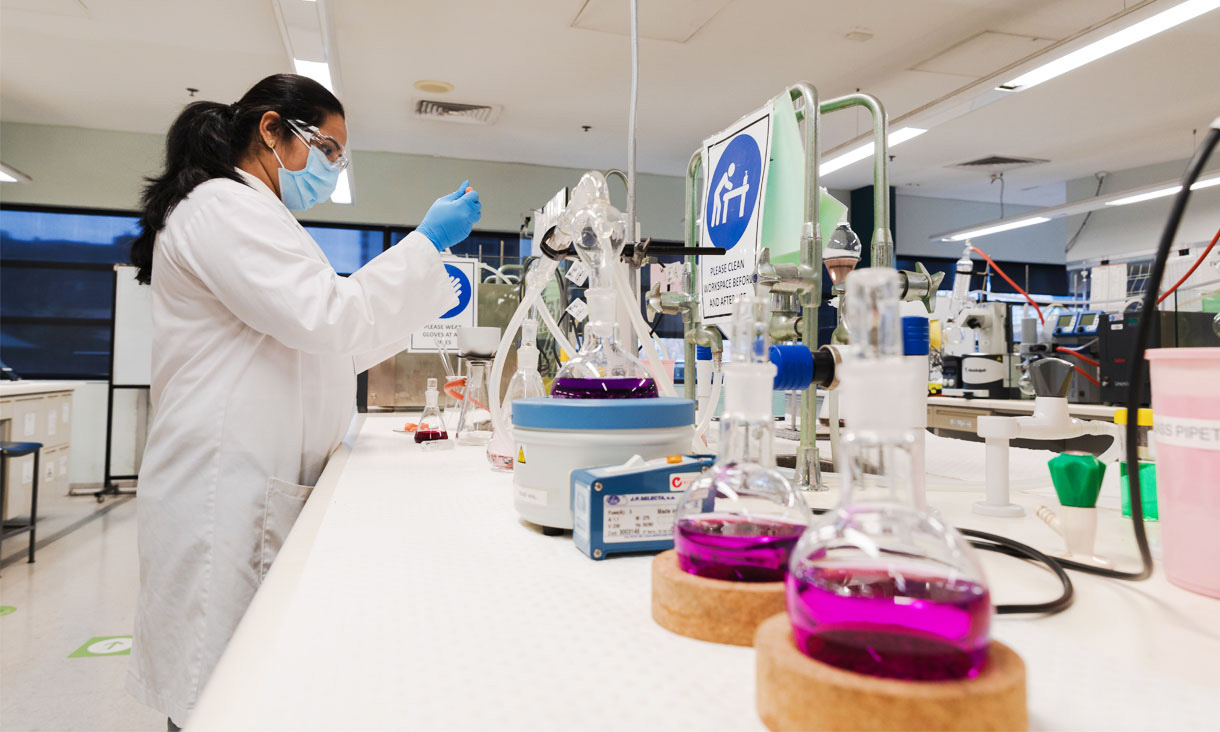
- considerable hands-on experience with equipment both in the laboratory and in the field
- the opportunity to specialise with a minor in environmental biology or environmental chemistry
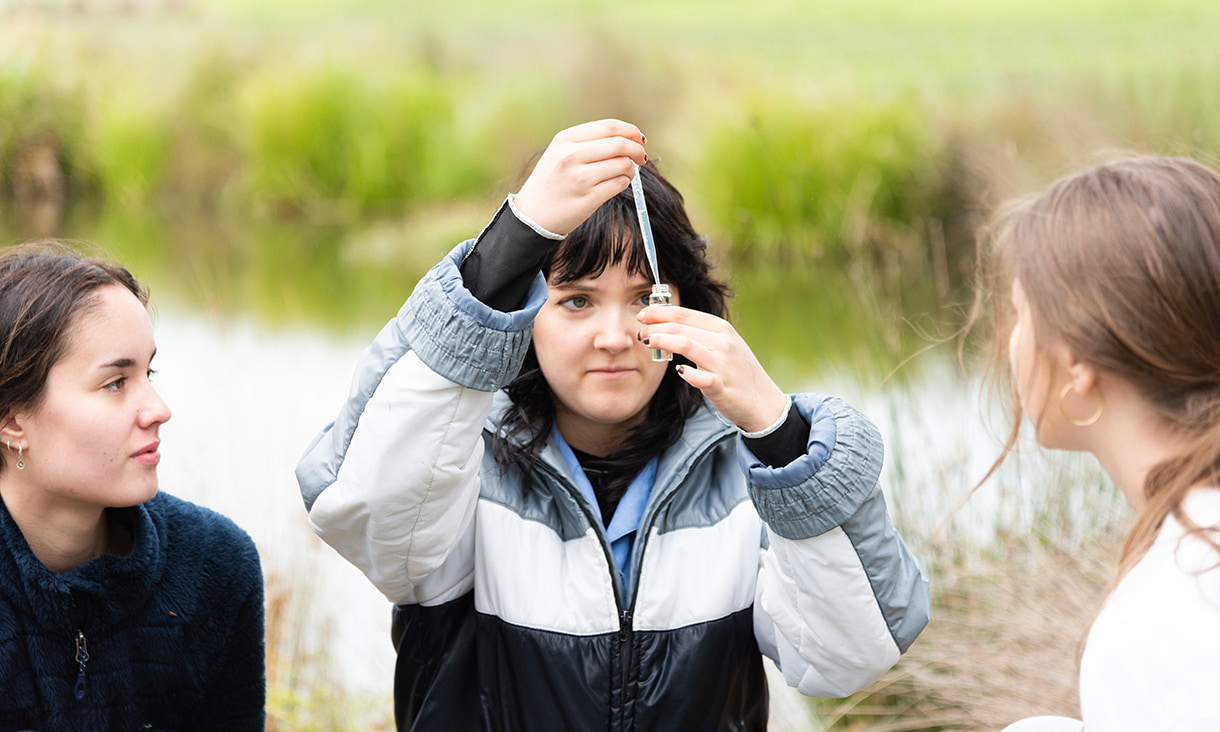
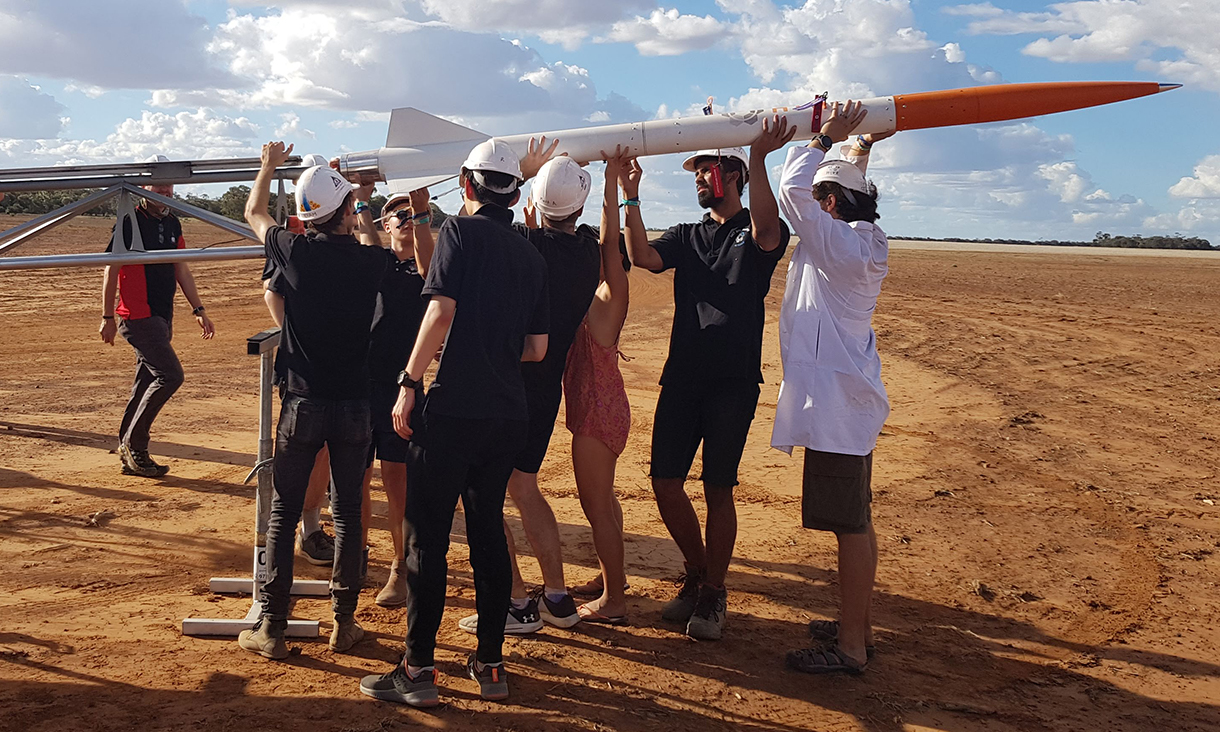
- field trips as an integral part of the learning process
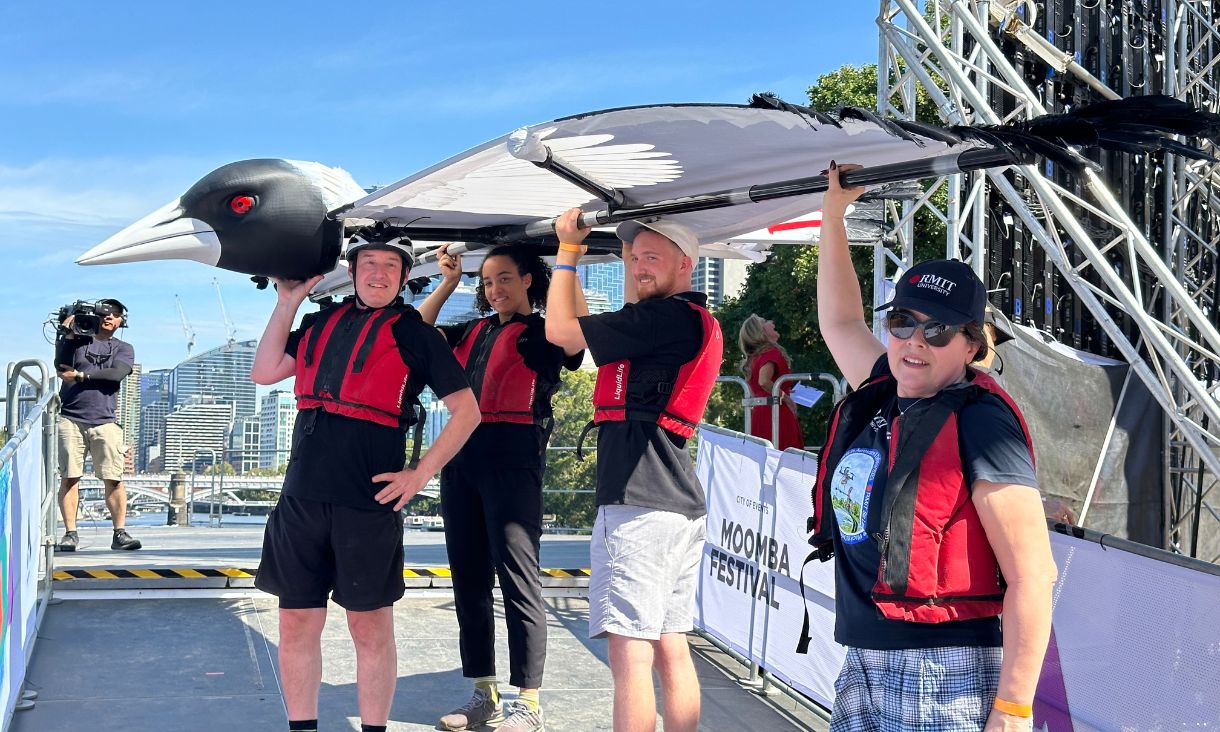
- the opportunity to work on collaborative projects with industry, generally in small teams
- a sound understanding of the principles of business management
As a double degree student, you will gain further skills and knowledge that may extend your career opportunities into future management positions.
Details
All students engage with industry in their final-year project, both in environmental science and in business.
Field trips are a feature of the program.
In the fourth year you have the opportunity to work with a range of environmental agencies and consultancies.
You may take one or more semesters at an overseas institution through the Education Abroad program at more than 120 partner universities.
Past students have studied in places such as Denmark (Technical University of Denmark), Canada (Concordia), Sweden (Lund University), Holland (Delft University of Technology) and the USA (Buffalo State University).
You will study the same core environmental science and business management courses included in the single degree. You can also choose to specialise with a minor in environmental biology or environmental chemistry.
Environmental biology covers topics including ecology, plant science and bioremediation relevant to agriculture, horticulture and the natural environment.
Environmental chemistry focuses on chemical interactions occurring in the environment and provides the skills and knowledge needed to analyse chemical pollutants in the air, soil, water and biota using a range of techniques and instrumentation.
The business courses in later years of the program provide an understanding of business management skills and knowledge to lead teams and projects.
Choose a program structure
| Title | Location | Duration | Plan code | CRICOS | ||
|---|---|---|---|---|---|---|
| Bachelor of Environmental Science/Bachelor of Business (Management) | City Campus |
4 years full time
|
4 years full time
|
BP161ESDD6 | 043570K |
Choose a program structure
Program code: BP161
Career
Increasingly, companies must be responsible for their environmental impact. They need professionals with the environmental science and business skills to develop environmental processes and plans and to manage their performance.
Graduates are in demand and work in areas including:
- environmental consultancies
- analytical services for site assessment and remediation recycling and treatment companies
- forestry
- mining and service industries
Admissions
*ATAR refers to the lowest selection rank to which an offer was made (including consideration of any adjustments) for current and recent year 12 applicants.
RMIT is committed to providing transparency to the admissions process. In line with this commitment, we provide you with information that will help in making informed choices about your undergraduate study options.
RMIT admits students from a range of educational pathways, including Year 12 results, previous higher education or vocational education study, work experience, and for some programs - interviews, auditions or portfolios.
Gain a better understanding of the Admission criteria for this program by viewing RMIT’s Admission information.
The highest level of education you have previously completed will determine which category applies to you.
Entry to this program is competitive. Applicants are ranked and selected in order of merit based on their academic achievement, e.g., ATAR or GPA (including any adjustments).
Applicants with recent secondary education (current or within the past two years)
Successful completion of an Australian Year 12 senior secondary certificate of education or equivalent in 2016, 2017 or 2018. If applicable, this includes equity access schemes and any other adjustment factors.
School Network Access Program (SNAP)
The SNAP access scheme is designed to increase tertiary access and participation of eligible students from SNAP partner schools.
Applicants with Vocational Education and Training study
Satisfactory completion of an Australian Certificate IV or above or equivalent.
Applicants with Higher Education study
Satisfactory completion of at least four courses (subjects) at an Australian undergraduate level or overseas equivalent.
Applicants with Work and Life Experience
Satisfactory completion of an Australian Year 12 senior secondary certificate of education or equivalent more then two years ago.
You must sit the Special Tertiary Admissions Test (STAT) Multiple Choice if:
- You have no prior Year 12, VET qualifications, HE results or relevant work experience that meet the minimum entry requirements for the program; and
- You are 19 years of age or over (as of 1 Jan 2019) and have not enrolled in secondary studies for at least two years.
The STAT Multiple Choice will satisfy Year 12 English and Year 11 Mathematics prerequisites. Applicants must meet all other prerequisites or equivalents. Learn more about RMIT STAT results.
You must have successfully completed an Australian Year 12 or an equivalent senior secondary school qualification with a minimum average of 70% (check calculator below) .
Equivalent qualifications may also include completion of the RMIT Foundation Studies program or a recognised post secondary diploma in the relevant discipline with the required grades.
Meeting the minimum academic requirements does not guarantee entry. Your application will still need to be assessed and accepted.
If you don't meet the entry requirements, there may be other RMIT programs you are eligible for that can lead you to your preferred program. Explore pathway options.
Form: Non-Year 12 applicants may submit additional information if they would like it to be considered.
- For semester 1 intake, this can be completed through the VTAC Personal Statement online.
- For semester 2 intake, this can be completed through the personal statement in the Apply Direct application.
Aboriginal and Torres Strait Islander peoples
The Indigenous Access Program will support your application into RMIT programs through an informal interview process with support from the Ngarara Willim Centre. Your relevant life, work, educational and training experience as preparation for study, in addition to any formal qualifications, are all considered.
Elite Athlete Program
The RMIT Elite Athlete Program (REAP) supports elite athlete and emerging athletes to achieve sporting and academic excellence.
To study this program you will need to complete one of the following English proficiency tests:
- IELTS (Academic): minimum overall band of 6.5 (with no individual band below 6.0)
- TOEFL (Paper Based Test): minimum score of 580 (TWE 4.5)
- TOEFL (Internet Based Test - IBT): minimum overall score of 79 (with minimum of 13 in Reading, 12 in Listening, 18 in Speaking and 21 in Writing)
- Pearson Test of English (Academic) (PTE (A)): minimum score of 58 (with no communication band less than 50)
- Cambridge English: Advanced (CAE): minimum of 176 with no less than 169 in any component.
For detailed information on English language requirements and other proficiency tests recognised by RMIT, visit English language requirements and equivalency information.
Don't meet the English language test scores? Complete an Advanced Plus Certificate at RMIT English Worldwide.
Pathways
When you successfully complete this program you may be eligible for entry to the Bachelor of Science (Applied Sciences) (Honours).
Alternatively, you may be eligible for entry into other RMIT honours or other postgraduate programs.
Fees
All undergraduate and honours degrees have Commonwealth supported places (CSP) available.
In a Commonwealth Supported Place (CSP), your tuition fees are subsidised by the Australian Government. Your share of the fee (student contribution) is set each year by the government and is determined by the discipline areas (bands) of your individual enrolled courses, not the overall program.
As a CSP student, you may be eligible to apply for a HECS-HELP loan, which allows you to defer payment of up to 100% of your student contribution.
Learn more about fees for undergraduate study.
How much can I expect to pay for my Commonwealth supported place?
Courses (subjects) fall into one of three bands. The band determines the student contribution amount for the course.
Amounts listed in the table below are based on a standard, full-time study load (96 credit points per year) with all courses in the same band. A proportionate fee applies for more or less than the full-time study load or for enrolment in courses (subjects) from a combination of bands.
You can learn how to calculate your exact tuition fees for units from different bands at Fees for Commonwealth supported students.
Maximum student contribution amount for Commonwealth supported places in 2018
| Student contribution band by course (subject) | Maximum annual student contribution amount in 2018 |
|---|---|
| Band 1: humanities, behavioural science, social studies, clinical psychology, foreign languages, visual and performing arts, education, nursing | $6,444 per standard year $805 per standard (12 credit point) course |
| Band 2: mathematics, statistics, computing, built environment, other health, allied health, science, engineering, surveying, agriculture | $9,185 per standard year $1,148 per standard (12 credit point) course |
Band 3: law, accounting, administration, economics, commerce, dentistry, medicine, veterinary science |
$10,754 per standard year $1,344 per standard (12 credit point) course |
HECS-HELP
The Australian Government provides financial assistance via the HECS-HELP loan scheme, which allows eligible students (such as Australian citizens or holders of an Australian permanent humanitarian visa) to defer payment of up to 100% of their student contribution.
How does a HELP loan work?
If your HECS-HELP and/or SA-HELP loan application is successful, the Australian Government will pay RMIT, on your behalf, up to 100% of your fees. This amount will become part of your accumulated HELP debt.
You will only start repaying your accumulated HELP debt to the Australian Government once you earn above the minimum income threshold for repayment, which is set each year by the Australian Government (this also applies if you are still studying).
The Australian Taxation Office (ATO) will calculate your compulsory repayment for the year and include this on your income tax notice.
For more information about loan repayment options see Commonwealth assistance (HELP loans) or Study Assist.
In addition to tuition fees, you will be charged an annual student services and amenities fee (SSAF), which is used to maintain and enhance services and amenities that improve your experience as an RMIT student.
The SSAF is calculated based on your enrolment load and the maximum fee for 2018 is $298.
You may be eligible to apply to defer payment of the SSAF through the SA-HELP loan scheme. If you use SA‑HELP, the amount will be added to your accumulated HELP debt.
For more information about calculating your actual SSAF see Paying SSAF.
You may also be required to purchase other items related to your program, including field trips, textbooks and equipment. These additional fees and expenses vary from program to program.
The annual tuition fee for 2019 is AU$38,880.
The total indicative tuition fee for 2019 commencement is AU$162,000.
In addition to tuition fees you also need to pay for:
- Student services and amenities fee (SSAF) in each calendar year.
- Overseas Student Health Cover (OSHC) - Student visa holders must have cover for the total duration of their visa.
- Some programs incur additional expenses.
You also need to account for your living expenses. Estimate the cost of living in Melbourne.