The Master of Public Policy is designed for a world where problems are complex, systems are interconnected, and careers are rarely linear. You’ll develop rigorous, policy‑specific knowledge and skills in systems thinking, evidence‑informed analysis, ethics, and policy design and implementation, preparing you to work confidently in uncertain and contested environments.
A core focus is learning to navigate complexity: understanding how policies interact across domains, how power and institutions shape outcomes, and how emerging technologies and shocks disrupt existing arrangements. Complexity and Innovation seminars deepen your capacity to interpret and respond to systemic challenges and provide thought leadership on contemporary debates.
The Policy Lab is the program’s experiential heart. Here you work with peers and practitioners on real policy challenges, applying your learning to live problems, testing ideas, and sharpening your judgement, communication and collaboration skills.
You curate your own pathway by aligning your studies with policy interests such as climate and the environment, social policy, and justice and inclusion, and by selecting from a broad suite of applied interdisciplinary skills. The program provides a unique opportunity to undertake a minor in Arts Policy and Management for students interested in cultural policy.
Prior learning and professional experience are recognised, enabling experienced practitioners to enter at an appropriate level and focus on advanced integration and impact. You will graduate with deep policy capability and a personalised, interdisciplinary portfolio of applied work.
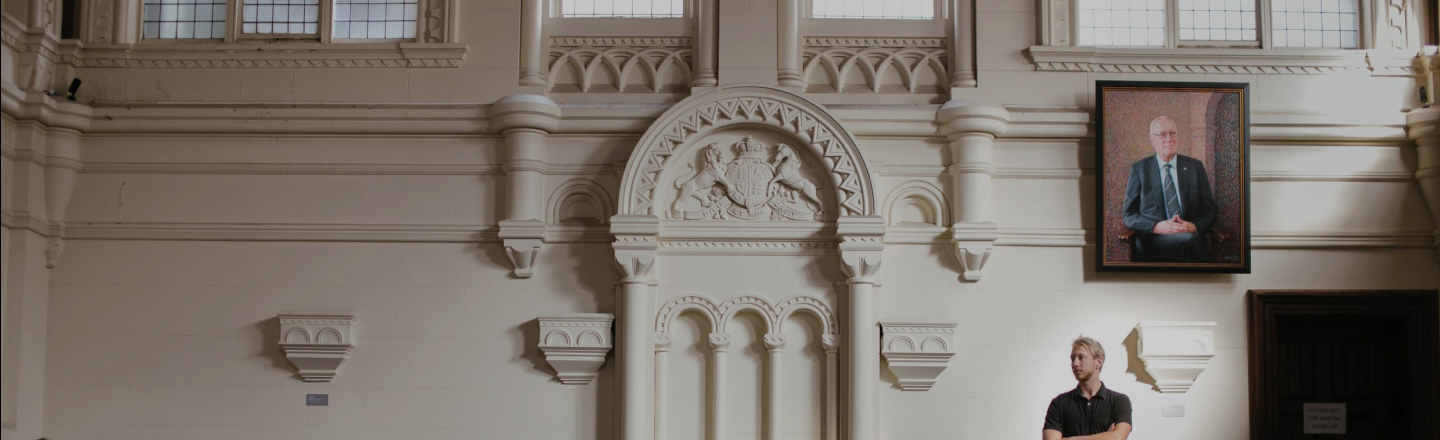
Deepen your ability to explore, navigate and respond to complex policy environments.
Shape your program in line with your interests, professional development needs.
Learn from leading academics and experienced practitioners to uplift your policy impact.
Targets highly valued cross-disciplinary skills, offering training in strategic communications, human-centred design, project management, and organisational leadership.
Designed for those interested in the creative industries and the unique policy landscapes of the cultural sector.
Most of the classes are held in a group workshop format for you to interact with others, and benefit from the experience and knowledge of your peers.
RMIT offers a variety of learning and teaching approaches, including problem based learning, case studies, collaborative group workshops, presentations and group discussions.
Ongoing assessment throughout the semester includes policy briefs, applied policy challenges, oral presentations and capstone projects.
The types of classes you have will depend on the course you’re studying. Classes are offered in various formats designed to provide meaningful engagement with staff, industry and peers and provide for access and use of spaces where learning can be applied and active, including an array of specialised equipment.
Most RMIT courses do not include passive large-scale classes such as lectures, instead the content traditionally provided in lectures is made available online. This may be in the form of readings, videos or other on-demand learning materials. This content will also support the basis of interactive learning that takes place in on-campus classes.
The world is constantly changing, and there are universal skills that can help you adapt to the evolving nature of work and global engagement.
As part of your study experience at RMIT, we provide 6 future-focused RMIT Capabilities:
RMIT Capabilities are built into your course as well as some of our extracurricular experiences. They inform the design and delivery of your learning activities and assessments, so by the time you graduate, you’ll be ready to apply these capabilities in your life and work.
RMIT offers a range of opportunities for our students to study abroad through overseas work, exchange and study experiences with over 165 partner universities worldwide.
Full- or part-time study is determined by how many credit points you are enrolled in during the semester. An undergraduate study load is considered part-time if you are enrolled in 24 credit points or fewer (approximately two subjects).
Once you are enrolled into this degree you can choose to switch to a part-time study load. This may impact your program duration and tuition fees. Please discuss your study options with your program manager prior to enrolment.
International student visa holders can only study full-time.
This course consists of 192 credit points. It is taught primarily through evening classes during the week, with some classes delivered through intensive full-day workshops.
International student visa holders can only study full-time.
As a graduate, you will be able to make sense of critical issues in society, confidently argue about the nature of policy problems, and engage in policy development and implementation practices that contribute to positive policy outcomes.
Graduates often work as policymakers, advisors, managers and advocates.
You’ll be able to work independently and collaboratively in teams as a lifelong learner and reflective practitioner. You will have gained skills that are transferable and relevant in a global context. These skills relate to research, policy analysis, professional communication and problem-solving.
Graduates are highly employable in human services organisations, community-based agencies, various levels of government and, increasingly, in corporate and private enterprise.
Relevant organisations include:
You need to satisfy all of the following entry requirements to be considered for entry into this degree.
OR
An Australian Bachelor degree (or equivalent overseas qualification) in a cognate discipline with a minimum GPA of 2.5 (out of 4.0);
OR
An Australian Bachelor degree (or equivalent overseas qualification) in a non-cognate discipline, plus a minimum of 2 years of relevant experience in a designated policy position (equivalent to VPS4) or equivalent experience. To have your professional experience considered you must submit with your application a CV and a personal statement detailing your experience.
RMIT’s Graduate Diploma in Public Policy
Notes:
There are no prerequisite subjects required for entry into this qualification.
A selection task is not required for entry into this qualification.
You must meet the University's minimum English language requirements to be eligible for a place in this course.
You need to satisfy all of the following requirements to be considered for entry into this course.
You must have successfully completed a qualification recognised by RMIT as equivalent to the Victorian Certificate of Education (VCE) with a minimum average of 65% (see calculator below).
Equivalent qualifications may also include completion of the RMIT Foundation Studies course or a recognised post secondary diploma in the relevant discipline with the required grades.
Meeting the minimum academic requirements does not guarantee entry. Your application will still need to be assessed and accepted.
There are no prerequisite subjects required for entry into this qualification.
A selection task is not required for entry into this qualification.
To study this course you will need to complete one of the following English proficiency tests:
Note: RMIT does not accept scores from 'at-home' or 'online' testing.
For detailed information on English language requirements and other proficiency tests recognised by RMIT, visit English language requirements and equivalency information.
Don't meet the English language test scores? Complete an English Language Pathways (Academic English) Advanced at RMIT University Pathways (RMIT UP).
The following information outlines the tasks you will be required to undertake during professional experience placement and on-campus learning activities.
The non-academic abilities listed are provided for your information only and are not entry requirements.
By understanding the types of activities you'll participate in, you can:
If there are any activities outlined which may be difficult for you to undertake, there is a range of adjustments to your study conditions available to enable and support you to demonstrate these abilities.
Please contact the Equitable Learning Services (ELS) team to discuss any adjustments you may require. To receive learning adjustments, you need to register with ELS.
If you are living with disability, long-term illness and/or a mental health condition, we can support you by making adjustments to activities in your course so that you can participate fully in your studies.
The University considers the wellbeing and safety of all students, staff and the community to be a priority in academic and professional experience placement settings.
You can gain entry to this master's degree from a range of RMIT undergraduate courses, if you meet the entry requirements.
If you have completed one of the following qualifications in policy studies, political science, sociology, international studies, social policy and human rights, social work/social welfare, social research, legal and justice studies, urban policy and housing, environment and sustainability, you may be eligible for masters advanced standing relevant to your qualification level as stated in the table below.
If you have completed the equivalent of an Australian bachelor's degree or higher-level qualification in any other discipline and have a minimum of 2 or more years of experience in a designated policy position (equivalent to VPS4), you may be eligible for masters exemptions of up to 48 credit points.
| Qualification level | Advanced standing | Remaining program duration |
|---|---|---|
| Bachelor degree (AQF level 7) | 48 credit points (equivalent to one semester full time study) | 144 credit points (equivalent to three semesters full time study) |
| Bachelor honours degree (AQF level 8) | 96 credit points (equivalent to two semesters full time study) | 96 credit points (equivalent to two semesters full time study) |
| Graduate certificate (AQF level 8) | 48 credit points (equivalent to one semester full time study) | 144 credit points (equivalent to three semesters full time study) |
| Graduate diploma (AQF level 8) | 96 credit points (equivalent to two semesters full time study) | 96 credit points (equivalent to two semesters full time study) |
The Australian Qualifications Framework (AQF) is the national policy for Australian qualifications in vocational and higher education.
Applicants with a bachelor's degree (honours), graduate certificate, graduate diploma or master's qualification majoring in a different discipline may also be eligible for credit transfer of up to 48 credit points (equivalent to one semester full time study).
Credit and exemptions will be assessed consistent with the principles of the RMIT Credit Policy.
If you would like to be assessed for additional Recognition of Prior Learning based on relevant professional experience, you must submit with your application a detailed CV, position description for each relevant role, and a personal statement detailing your experience.
Upon successful completion of this master's degree, you may be eligible to undertake further studies in related courses at RMIT University, including postgraduate research degrees, subject to the degree's entrance requirements.
You can gain entry into this degree from a range of RMIT undergraduate degrees.
If you have successfully completed one of the following qualifications majoring in policy, politics, sociology or social work you may be eligible for advanced standing as follows:
| Qualification level | Advanced standing | Remaining program duration |
|---|---|---|
| Bachelor degree (AQF level 7) | 48 credit points (equivalent to one semester full time study) | 144 credit points (equivalent to three semesters full time study) |
| Bachelor honours degree (AQF level 8) | 96 credit points (equivalent to two semesters full time study) | 96 credit points (equivalent to two semesters full time study) |
| Graduate certificate (AQF level 8) | 48 credit points (equivalent to one semester full time study) | 144 credit points (equivalent to three semesters full time study) |
| Graduate diploma (AQF level 8) | 96 credit points (equivalent to two semesters full time study) | 96 credit points (equivalent to two semesters full time study) |
The Australian Qualifications Framework (AQF) is the national policy for Australian qualifications in vocational and higher education.
Applicants with a bachelor honours degree, graduate certificate, graduate diploma or master's degree qualification majoring in a different discipline may also be eligible for credit transfer of up to 48 credit points (equivalent to one semester full-time study).
When you are submitting an application, please indicate that you want to be considered for credit and provide detailed course syllabus (also known as course outline), outlining volume of learning, course content and weekly topics, learning objectives/outcomes, assessment types and weightings, and reference to the learning resources.
Credit and exemptions will be assessed consistent with the principles of the RMIT Credit Policy.
Upon successful completion of this degree, you may be eligible for entry into an RMIT Master by Research or Doctoral (PhD) degree.
Amounts quoted are indicative fees per annum, and are based on a standard year of full-time study (96 credit points). A proportionate fee applies for more or less than the full-time study load.
*Fees are adjusted on an annual basis and these fees should only be used as a guide.
This program is offered on a full-fee paying basis only. If you are offered a place, you will need to pay the full tuition costs of your program. However, eligible students (such as Australian citizens or holders of an Australian permanent humanitarian visa) may apply to defer payment of some or all of their tuition fees via the Commonwealth Government’s FEE-HELP loan scheme.
For information on how to pay your fees or how to apply for a refund, please see Paying your fees and applying for refunds.
In addition to tuition fees, you will be charged an annual student services and amenities fee (SSAF), which is used to maintain and enhance services and amenities that improve your experience as an RMIT student.
The SSAF is calculated based on your enrolment load and the maximum fee for 2027 is $386.
You may also be required to purchase other items related to your course, including field trips, textbooks and equipment. These additional fees and expenses vary from course to course.
Eligible students (such as Australian citizens or holders of an Australian permanent humanitarian visa) may apply to defer payment of some or all of their tuition fees via the Commonwealth Government’s FEE-HELP loan scheme.
You may be eligible to apply to defer payment of the Student services and amenities fee (SSAF) through the SA-HELP loan scheme. If you use SA-HELP, the amount will be added to your accumulated HELP debt.
If your FEE-HELP and/or SA-HELP loan application is successful, the Australian Government will pay RMIT, on your behalf, up to 100% of your fees. This amount will become part of your accumulated HELP debt.
You only start repaying your accumulated HELP debt to the Australian Government once you earn above the minimum income threshold for repayment, which is set each year by the Australian Government (this also applies if you are still studying). The Australian Taxation Office (ATO) will calculate your compulsory repayment for the year and include this on your income tax notice.
For more information about loan repayment options see Commonwealth assistance (HELP loans) or Study Assist.
You may be eligible for student income support payments from the Commonwealth Government if you are undertaking a graduate certificate, graduate diploma or an approved professionally oriented masters by coursework program. For more information see Income support for Masters students.
If you are enrolled in an eligible program you will also need to satisfy all other student payment eligibility requirements. You can contact Centrelink or Services Australia for further information about student income support entitlements, your eligibility and how to apply.
You may be eligible to apply for income tax deductions for education expenses linked to your employment.
See the Australian Taxation Office (ATO) for more information.
RMIT awards more than 2000 scholarships every year to recognise academic achievement and assist students from a variety of backgrounds.
In addition to tuition fees you also need to pay for:
You also need to account for your living expenses. Estimate the cost of living in Melbourne.
In addition to tuition fees, you will be charged an annual student services and amenities fee (SSAF), which is used to maintain and enhance services and amenities that improve your experience as an RMIT student. The SSAF is calculated based on your enrolment load and the maximum fee for 2027 is $386.
Find out more details about how fees are calculated and the expected annual increase.
Find information on how to apply for a refund as a continuing international student.
RMIT awards more than 2000 scholarships every year to recognise academic achievement and assist students from a variety of backgrounds.
Use our Frequently Asked Questions to learn about the application process and its equity access schemes, find out how to accept or defer your offer or request a leave of absence, discover information about your fees, refunds and scholarships, and explore the various student support and advocacy services, as well as how to find out more about your preferred program, and more.

RMIT University acknowledges the people of the Woi wurrung and Boon wurrung language groups of the eastern Kulin Nation on whose unceded lands we conduct the business of the University. RMIT University respectfully acknowledges their Ancestors and Elders, past and present. RMIT also acknowledges the Traditional Custodians and their Ancestors of the lands and waters across Australia where we conduct our business - Artwork 'Sentient' by Hollie Johnson, Gunaikurnai and Monero Ngarigo.
Learn more about our commitment to Indigenous cultures