



School of Art Honours Travelling Grant
For art honours students who can demonstrate outstanding academic achievement; worth up to $4,000.

Push boundaries and expand your creative practice in this intensive, flexible and mentored honours degree.

This degree is designed for students who have successfully completed a three-year degree in contemporary art or craft, or an equivalent field, and who wish to undertake a further year of study to focus exclusively on an individual project.
At this level of study, you will engage with high-level intensive subjects, deepening and enriching your practice through expertise, knowledge and criticality.
You will be guided through personalised mentorship and individual supervision, as you are introduced to practice-led research and research methodologies.
A flexible curriculum provides opportunities for you to develop an individual project and to further your knowledge and capability for professional or highly skilled art practice, and/or further learning at a postgraduate level.
This degree provides a supportive and consultative environment, emphasising independent practice, research and development, where you will form your own project and personal course of study through consultation with academic staff.
All academic staff within the degree are artists, theorists or curators with local, national and, in most instances, international experience. You will be introduced to dynamic and exciting practice-led research and research methodologies.
The degree is designed as a full-year course of study to build upon your previous undergraduate studies, with a refined contemporary art project as a final outcome. Consequently, having devised an informed and rigorous contemporary art practice, our alumni are ready for high levels of practice and are regularly involved in local, national and international art events, or in undertaking a postgraduate research degree.
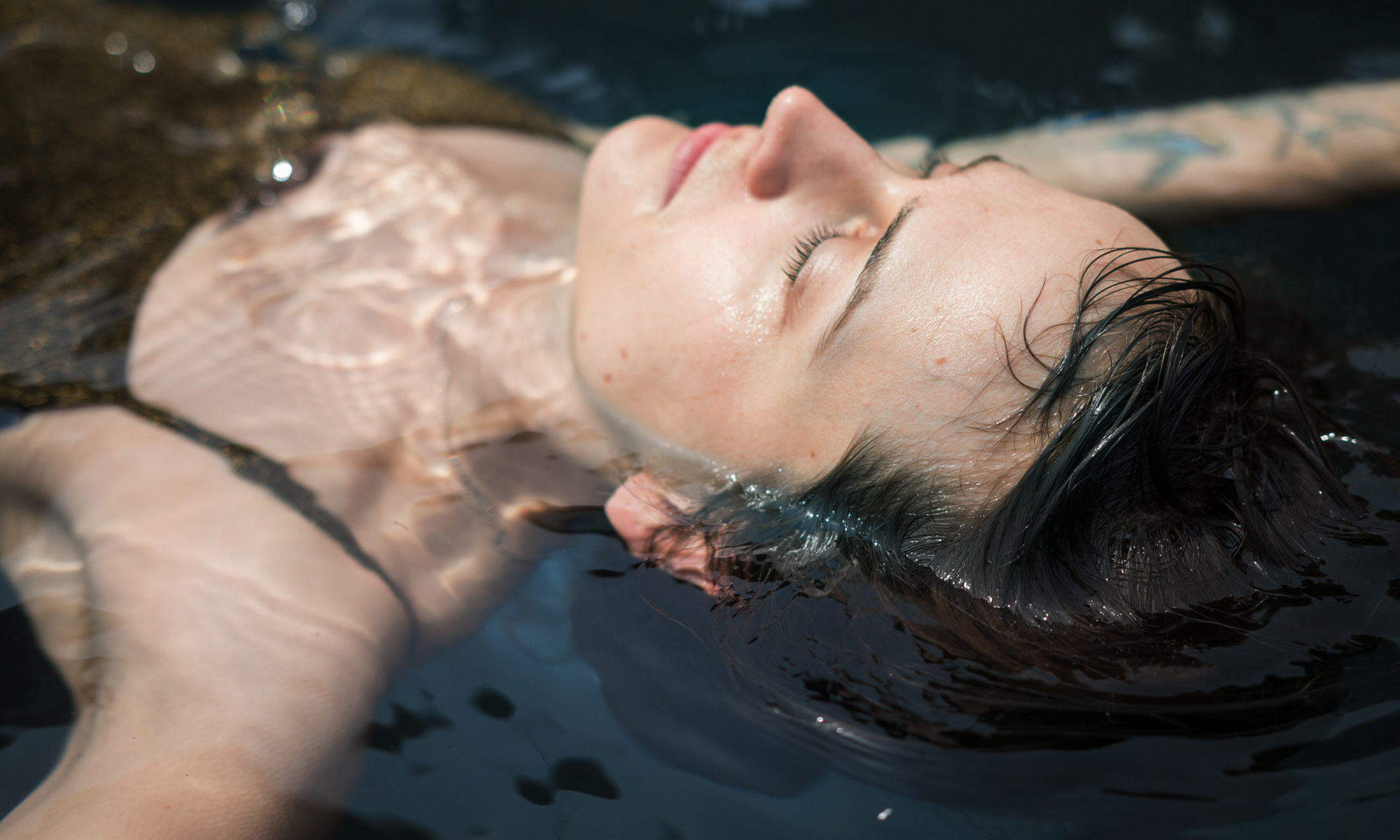 Sara Retallick, 'Drift', 2018. 16 - channel underwater sound installation, no set duration. Installation view. Photo: Sara Retallick.
Enjoy individual supervision from talented industry professionals.
Your major work will be exhibited to expert curators and commercial gallerists.
Develop your practice within a focused, practical research culture.
With projects by emerging artists, the annual RMIT School of Art Graduate Exhibition celebrates the innovation and technical expertise of RMIT Fine Art (Honours) students.
Your major work will be exhibited in the Masters and Honours Graduate Exhibition. Curators from the NGV, ACCA and Heide Museum of Modern Art attend alongside notable commercial gallerists.
To read the full image descriptions, please click on the individual image above.
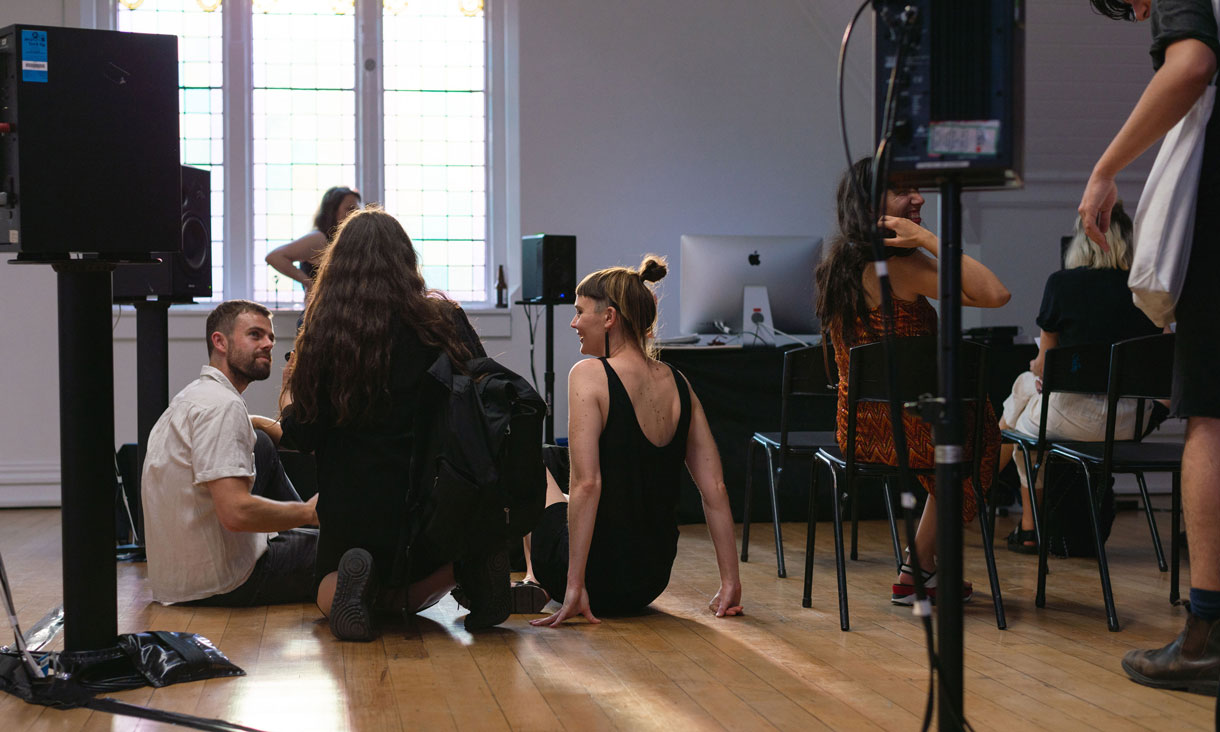
Develop your art practice with practical studio-based learning, supported by a focused academic research culture.
Image: 2018 Bachelor of Arts (Fine Art) (Honours) studio presentation.
Photo: Keelan O'Hehir.
This degree is centred in practical studio-based learning, supported by a focused academic research culture.
The study structure consists of lectures, seminars, reading groups, individual and group critique sessions, personal guidance through individual supervision, and group workshops. This set of experiences provides a framework in which to contextualise and develop an informed and specialised contemporary art practice.
Our academic staff have many years of professional experience, shared through their expertise in the learning environment.
Students are provided with individual supervision by our academic staff through the duration of their honours project.
Assessment comprises presentations and installations of creative artistic works, an exegetical research text, written reflections and seminar presentations.
The types of classes you have will depend on the course you’re studying. Classes are offered in various formats designed to provide meaningful engagement with staff, industry and peers and provide for access and use of spaces where learning can be applied and active, including an array of specialised equipment.
Most RMIT courses do not include passive large-scale classes such as lectures, instead the content traditionally provided in lectures is made available online. This may be in the form of readings, videos or other on-demand learning materials. This content will also support the basis of interactive learning that takes place in on-campus classes.
The world is constantly changing, and there are universal skills that can help you adapt to the evolving nature of work and global engagement.
As part of your study experience at RMIT, we provide 6 future-focused RMIT Capabilities:
RMIT Capabilities are built into your course as well as some of our extracurricular experiences. They inform the design and delivery of your learning activities and assessments, so by the time you graduate, you’ll be ready to apply these capabilities in your life and work.
RMIT University is committed to providing you with an education that strongly links formal learning with professional practice.
Therefore to support your studies we often connect into our network of artists, curators, gallerists and allied creative groups, both locally and internationally.
RMIT School of Art has strong international connections and a long tradition and focus on international engagement.
There are opportunities to attend specialised workshops and lectures by leading international artists and curators. Annual prizes and awards assist graduates to build international experience into their practice and emerging careers. The following awards are conferred on those students who demonstrate outstanding art practices and academic achievement.
These awards are adjudicated by a panel of arts industry professionals and conferred prior to the annual Graduation Exhibition. The awards were established to support honours graduates from the school to continue their research overseas, following the completion of an honours degree. Each of these awards of approximately $4000 are provided to recipients to travel to a destination of their choice.
RMIT offers a range of opportunities for our students to study abroad through overseas work, exchange and study experiences with over 165 partner universities worldwide.
As a student in this course, you will build a comprehensive body of knowledge that articulates the character of your artistic practice and enables you to construct a proactive career as a creative. You will develop and implement your vision of practice through various social, cultural, environmental and historical contexts.
Through your honours project, you will initiate independent research in your area of choice, then critically analyse, synthesise and reflect on your findings and your arts practice as a whole. This will establish you as a creative professional who continually improves their practice, able to catalyse invention, innovation, and refinement of personal work to established industry standards.
As a graduate of this course, you will be able to work autonomously and collaboratively, with the ability to apply new theories of practice and embrace new developments in cultural and artistic production, all contributing to a varied, creative and fulfilling career.
Using critical enquiry, practice-based research methodologies and ‘thinking through making’, the structure of this degree allows you to take ownership of your fine art education.
You will be allocated a senior academic as a supervisor who will provide support and guidance as you develop your honours project.
Choose a plan below to find out more about the subjects you will study and the course structure.

International student visa holders can only study full-time.
The arts and creative industries continue to grow in Australia, and particularly within Melbourne.
This is due to increased interest, along with government support and a longstanding cultural focus across the arts in general.
Multi-skilled and employable in a range of creative industries, our graduates continue to make significant contributions to contemporary art and culture, nationally and internationally.
In the School of Art at RMIT University we pride ourselves in achieving outcomes that not only prepare for, but enhance the future careers of our graduates. ‘Work ready’ is a term often used to describe these qualities; with our graduates seen as future leaders, or indeed shapers of the ‘world of work’.
Many of our graduates have continued on to become:
The skills you develop as a deeply creative, critical and independent thinker are skills that are lifelong. These skills make you competitive in any occupation or vocation. The communities and culture you build through this vibrant and intense degree will go on to shape the societies we share.
You need to satisfy all of the following requirements to be considered for entry into this degree.
You must have successfully completed an Australian bachelor degree (or equivalent overseas qualification) in a relevant discipline with a minimum grade point average (GPA) of 2.0 (out of 4.0).
You must also complete and submit a selection task. Please refer to the 'Selection tasks' tab for more details.
There are no prerequisite subjects required for entry into this qualification.
You must complete and submit the Fine Art (Honours) selection task.
Please click the apply button to submit your direct application. The link to submit your selection task will appear on the applicant dashboard after you have submitted your application.
Entry into this program is competitive, and applications are assessed in the order that they are received until the selection task dates, if places are still available.
For your best chance at admission into this program, you are encouraged to apply as early as possible.
| Applicant type | Register and submit the selection task by |
|---|---|
| Timely applications | 30 November 2025 |
| Late applications | 27 February 2026 |
Your proposal should indicate what you anticipate your project (research) will encompass, why this research project is significant to your practice, along with an indication of how you intend to plan and undertake your research (including any specialised facilities that may be required). Your proposal should include the following sections:
Your proposal should be between 500 and 700 words. Remember that you haven’t done the research yet so there is no expectation that you have definitive answers at this stage. The proposal is to demonstrate that the area of enquiry is viable.
Your proposal must be uploaded as a single PDF.
Your folio should be presented as a single PDF document of 10-12 pages of work or projects. These numbers should be used as a guide only, however, as the exact number of examples you submit should reflect the nature of your practice (you may choose to submit slightly over or under these numbers).
The examples you choose to submit should allow the selection panel to evaluate the quality and ambition within your practice.
The majority of your examples should have been formed over the past 18 months. Please include titles and dates of works and, where applicable: medium, materials, dimensions or duration.
Folios will be assessed on the following:
Your folio must be uploaded as a single PDF (maximum size 10MB) or you can provide a URL to your folio if hosted online (provide the username and password if applicable).
Temporal submissions (video, sound) should be supplied as a URL link to Vimeo (other sites will not be considered). Please remember to supply a password if the link is private. If you wish to include multiple works, these should be compiled as a ‘showreel’ and must not exceed 10 minutes in length.
If you have used AI to generate images or texts in your selection task submission, please describe where this occurs and what AI tools were used (maximum 100 words).
Most applicants will be selected based on their selection task and will not be required to attend a folio presentation. If further information is needed to make a selection decision, you will be invited to a folio presentation.
You must meet the University's minimum English language requirements to be eligible for a place in this program.
The highest level of education you have previously completed will determine which category applies to you.
Secondary education (Year 12) is not considered for entry into this program.
Vocational education and training (VET) is not considered for entry into this program.
You must have successfully completed an Australian bachelor degree (or equivalent overseas qualification) in a relevant discipline with a minimum grade point average (GPA) of 2.0 (out of 4.0).
Work and life experience is not considered for entry into this program.
All applicants are required to complete and submit a selection task for this program. See below for full selection task details.
You must have successfully completed an Australian bachelor degree (or equivalent overseas qualification) in a relevant discipline with a minimum GPA of 2.0 (out of 4.0).
There are no prerequisite subjects required for entry into this qualification.
The Honours program has a significant research component. Prior to submitting your application, you must contact the School and confirm a supervisor and a research topic.
Selection task: You are required to submit a completed selection task along with your application.
Folio presentation: If further information is needed to make a selection decision, you will be invited to attend a folio presentation. This can be conducted in person or via video call.
To study this course you will need to complete one of the following English proficiency tests:
Note: RMIT does not accept scores from 'at-home' or 'online' testing.
For detailed information on English language requirements and other proficiency tests recognised by RMIT, visit English language requirements and equivalency information.
Don't meet the English language test scores? Complete an English for Academic Purposes (EAP) Advanced Plus at RMIT University Pathways (RMIT UP).
A pathway is an alternative way to get into a course. RMIT's pathways can help you move through different levels of study to reach the qualification you're aiming for, even if you don't meet the requirements for your destination course.
You can gain entry into this honours degree from a range of RMIT undergraduate programs, if you meet the entry requirements.
When you successfully complete this degree, you may be eligible for entry into an RMIT Postgraduate or Research degree.
You can gain entry to this honours degree from a range of RMIT undergraduate programs.
When you successfully complete this program, you may be eligible for entry into an RMIT postgraduate program or RMIT Masters by Research or Doctoral (PhD) program.
Credit, recognition of prior learning, professional experience and accreditation from a professional body can reduce the duration of your study by acknowledging your earlier, relevant experience.
Credit and exemptions will be assessed consistent with the principles of the RMIT Credit Policy.
Credit may reduce the duration of your study by acknowledging your earlier, relevant study experience.
When you are submitting an application, please indicate that you want to be considered for credit and provide detailed course syllabus (also known as course outline), outlining volume of learning, course content and weekly topics, learning objectives/outcomes, assessment types and their weightings, and reference to the learning resources such as prescribed textbooks and recommended readings.
In 2026, the annual student contribution amount (tuition fee) you will pay for a standard year of full-time study is between AU$4,738 to AU$17,399.
Amounts quoted are indicative fees per annum, and are based on a standard year of full-time study (96 credit points). A proportionate fee applies for more or less than the full-time study load.
Fees are adjusted on an annual basis and these fees should only be used as a guide.
You may be eligible to apply for a HECS-HELP loan, which can be used to defer payment of up to the full amount of your student contribution fees. You may also be eligible to apply to defer payment of your SSAF through the SA-HELP loan scheme.
Learn more about fees for undergraduate study.
For information on how to pay your fees or how to apply for a refund, please see Paying your fees and applying for refunds.
If you are offered a Commonwealth supported place, your tuition fees are subsidised by the Australian Government.
Your share of the fee (student contribution) is set on an annual basis by the government and is determined by the discipline areas (bands) of your individual enrolled courses, not the overall program.
The Australian Government has introduced changes to university funding and student contribution fees under its Job-ready Graduates Package.
The fees in the table below apply to students who commence their program in 2026. Fees for continuing students are available at fees for Commonwealth supported students.
Each course (subject) falls into a band. The band determines the student contribution amount for the course.
Amounts listed in the table below are based on a standard, full-time study load (96 credit points per year) with all courses in the same band. A proportionate fee applies for more or less than the full-time study load or for enrolment in courses (subjects) from a combination of bands.
You can learn how to calculate your exact tuition fees for units from different bands at Fees for Commonwealth supported students.
Student contribution band by course (subject) |
Maximum annual student contribution amount (per EFTSL) in 2026 |
|---|---|
| Education, Postgraduate Clinical Psychology, English, Mathematics, Statistics, Nursing, Indigenous and Foreign Languages, Agriculture | $4,738 per standard year $592 per standard (12 credit point) course |
| Allied Health, Other Health, Built Environment, Computing, Visual and Performing Arts, Professional Pathway Psychology, Professional Pathway Social Work, Engineering, Surveying, Environmental Studies, Science, Pathology | $9,537 per standard year $1,192 per standard (12 credit point) course |
| Dentistry, Medicine, Veterinary Science | $13,558 per standard year $1,694 per standard (12 credit point) course |
| Law, Accounting, Administration, Economics, Commerce, Communications, Society and Culture | $17,399 per standard year $2,174 per standard (12 credit point) course |
On 1 January 2022, the Government implemented the Student Learning Entitlement (SLE).
The Australian Government provides financial assistance via the HECS-HELP loan scheme, which allows eligible students (such as Australian citizens or holders of an Australian permanent humanitarian visa) to defer payment of up to the full amount of their student contribution.
You may be eligible to apply to defer payment of the Student services and amenities fee (SSAF) through the SA-HELP loan scheme. If you use SA-HELP, the amount will be added to your accumulated HELP debt.
If your FEE-HELP and/or SA-HELP loan application is successful, the Australian Government will pay RMIT, on your behalf, up to 100% of your fees. This amount will become part of your accumulated HELP debt.
You only start repaying your accumulated HELP debt to the Australian Government once you earn above the minimum income threshold for repayment, which is set each year by the Australian Government (this also applies if you are still studying). The Australian Taxation Office (ATO) will calculate your compulsory repayment for the year and include this on your income tax notice.
For more information about loan repayment options see Commonwealth assistance (HELP loans) or Study Assist.
In addition to tuition fees, you will be charged an annual student services and amenities fee (SSAF), which is used to maintain and enhance services and amenities that improve your experience as an RMIT student.
The SSAF is calculated based on your enrolment load and the maximum fee for 2026 is $373.
You may also be required to purchase other items related to your course, including field trips, textbooks and equipment. These additional fees and expenses vary from course to course.
In addition to tuition fees you also need to pay for:
You also need to account for your living expenses. Estimate the cost of living in Melbourne.
In addition to tuition fees, you will be charged an annual student services and amenities fee (SSAF), which is used to maintain and enhance services and amenities that improve your experience as an RMIT student.
The SSAF is calculated based on your enrolment load and the maximum fee for 2026 is $373.
Find out more details about how fees are calculated and the expected annual increase.
Find information on how to apply for a refund as a continuing international student.
For art honours students who can demonstrate outstanding academic achievement; worth up to $4,000.
RMIT awards more than 2000 scholarships every year to recognise academic achievement and assist students from a variety of backgrounds.
RMIT awards more than 2000 scholarships every year to recognise academic achievement and assist students from a variety of backgrounds.
Use our Frequently Asked Questions to learn about the application process and its equity access schemes, find out how to accept or defer your offer or request a leave of absence, discover information about your fees, refunds and scholarships, and explore the various student support and advocacy services, as well as how to find out more about your preferred program, and more.


RMIT University acknowledges the people of the Woi wurrung and Boon wurrung language groups of the eastern Kulin Nation on whose unceded lands we conduct the business of the University. RMIT University respectfully acknowledges their Ancestors and Elders, past and present. RMIT also acknowledges the Traditional Custodians and their Ancestors of the lands and waters across Australia where we conduct our business - Artwork 'Sentient' by Hollie Johnson, Gunaikurnai and Monero Ngarigo.
Learn more about our commitment to Indigenous cultures