Bachelor of Architectural Design

Bachelor of Architectural Design

UNDERGRADUATE

Gain the skills you need to be a leading architect. Work on real-world briefs and study in a world-class studio environment to create something that lasts. 

Student type:
Learning mode:
On campus
Entry score:

Range of criteria*

Duration:
Full-time 3 years
Next intake:
February, July
Location:
Melbourne City
Learning mode:
On campus
Entry score:

See admissions

Duration:
Full-time 3 years
Next intake:
February, July
Location:
Melbourne City

Overview

Acknowledged by the national and international architectural profession, the Bachelor of Architectural Design is designed to help you develop a rich understanding of architecture, and build a diverse set of skills that will carry you through your career.

Learn in an environment that is similar to a cutting-edge architectural design firm. Through your core and elective subjects, you'll have the opportunity to focus on your drawing, 2D and 3D design skills, and will be surrounded by like-minded creatives. You'll combine both experimental and speculative design with practical projects, and engage with real-life industry projects to expand your knowledge and help you discover innovative approaches to problem solving.

Learning from internationally-recognised and award-winning architects alongside visiting national and international experts, consultants and specialists, you will explore the core skills required of an architect and architectural designer. As a student, you will be immersed in new ideas and perspectives that will develop your design and communication skills.

Why study architectural design at RMIT?

Industry links

Design studios delivered by academic experts, innovative designers and international practitioners.

Hands-on learning

Learn in an environment that is similar to a cutting-edge architectural design firm.

Path to accreditation

This course is a pathway to the Master of Architecture, and professional accreditation.

Student in an orange top wears an orange top and a VR headset as she builds the Greek God Dad Bod Pavilion.

Slowbuild Augmented Reality Studio

Observe Bachelor of Architectural Design students designing, producing, assembling and hand-painting the inhabitable Greek God Dad Bod Pavilion structure over six weeks, using state-of-the-art facilities with the Slowbuild Augmented Reality Studio.

Details

Learning and teaching

It’s all centred around design.

Our unique design studios are one of the major reasons why RMIT Architecture and its graduates are so highly regarded by industry.

Learning intensively in small groups, you will have the opportunity to work intensively on one project throughout the semester. In your studios, you will have the opportunity to develop skills in drawing, 2D and 3D design in an environment that follows the best practice of a local or international design firm. Run by academics and leading members of industry, design studios provide a unique way of exploring ideas by challenging future designers, and allowing them to connect with peers, industry, and other disciplines.

Studios are located across the city campus and within the multi award-winning RMIT Design Hub designed by RMIT architecture alumni Sean Godsell. 

Assessment methods

In the Bachelor of Architectural Design, your assessment relies upon continuous cycles of reviewing, feedback and reflection. Throughout your study, your work is presented verbally, critiqued and submitted in a portfolio of drawings and images. Each semester, work from your design studios is presented as a part of a public exhibition.

Other forms of assessment include assignments and projects, presentations, essays, and tests. 

Learning at RMIT

The types of classes you have will depend on the course you’re studying. Classes are offered in various formats designed to provide meaningful engagement with staff, industry and peers and provide for access and use of spaces where learning can be applied and active, including an array of specialised equipment.

Most RMIT courses do not include passive large-scale classes such as lectures, instead the content traditionally provided in lectures is made available online. This may be in the form of readings, videos or other on-demand learning materials. This content will also support the basis of interactive learning that takes place in on-campus classes.

RMIT Capabilities

The world is constantly changing, and there are universal skills that can help you adapt to the evolving nature of work and global engagement.

As part of your study experience at RMIT, we provide 6 future-focused RMIT Capabilities:

  • Ethical Global Citizens
  • Connected
  • Adaptive
  • Digitally Adept
  • Expert
  • Critically Engaged.

RMIT Capabilities are built into your course as well as some of our extracurricular experiences. They inform the design and delivery of your learning activities and assessments, so by the time you graduate, you’ll be ready to apply these capabilities in your life and work.

Learn from internationally-recognised and award-winning architects.

RMIT aArchitecture is well known for its long-standing links with industry. Design studios are delivered by academic staff, as well as sessional staff from innovative practices, or visiting international practitioners and academics.

In design studios, you will also have the opportunity to work on real world projects with local and global community and industry partners. Many public lectures are held throughout the year, led by prominent local and international architects and urban designers.

Recent studio partners:

  • RMIT Associate Lecturer Amy Muir
    MUIR Architecture
  • RMIT Associate Professor Paul Minifie and Dr Jan van Schaik (lecturer)
    MvS Architects
  • RMIT Professor of Architecture Carey Lyon
    Lyons Architecture
  • RMIT Adjunct Professors Howard Raggatt and Ian McDougall
    ARM Architecture

The Bachelor of Architectural Design has a range of international exchange agreements with universities in the USA, Europe and Asia.

You’ll also have the opportunity to choose design studios that require overseas travel, and give you the opportunity to work with students from international universities.

Recent design studios have included collaborations with students in Berlin, Germany and architecture practices in Shanghai, China.

Overseas work, exchange and study experiences

RMIT offers a range of opportunities for our students to study abroad through overseas work, exchange and study experiences with over 165 partner universities worldwide.

As a graduate of this course, you will have advanced down the path toward becoming a graduate architect, with the competency to enter design practices and contribute creative and independent ideas and concepts to a design project team. You will be able to apply your design skills, both practical and theoretical, to conceptualise and develop designs, as well as to comprehend key architectural works, cultural movements, and ideas, and how these relate to broader social contexts.

You will also be able to critically analyse and evaluate a wide range of architectural challenges, then use this knowledge to reflect on your learning achievements and take responsibility for your future design direction and ongoing learning.

You will have skills in computer-based architectural communication, technology, and history, and have the ability to apply these skills to convey complex design ideas through verbal, visual, and written media to a diverse range of audiences.

This degree forms part of a 5-year specialist degree, made up of the 3-year Bachelor of Architectural Design plus the 2-year Master of Architecture by coursework.

The Bachelor of Architectural Design offers a range of opportunities to develop a strong knowledge base in the field and experience the architectural design process.

From first term, first semester you will be hands-on in design studios developing your design skills and learning in an environment that follows the best practice of an innovative architectural design firm.

Design studios typically makes up half the degree each semester and are taught in small groups. You will focus on a particular theme and project each semester. After first semester, you’ll be able to select which design studio you wish to follow, completing one per semester.

Supporting subjects such as technology, communication and history comprise the remainder of your degree, and give you an understanding of the social and physical contexts of the built environment, as well as teaching you drawing skills.

Course structure

Choose a plan below to find out more about the subjects you will study and the course structure.

Bachelor of Architectural Design
Program code: BP250

Title
Location
Duration
Plan code
CRICOS
Bachelor of Architectural Design
City Campus
Full-time 3 Years, Part-time 6 Years
BP250
060830J
Location
City Campus
Duration
Full-time 3 Years, Part-time 6 Years
Plan code
BP250
CRICOS
060830J
Bachelor of Architectural Design
City Campus
Full-time 3 Years
BP250
060830J
Location
City Campus
Duration
Full-time 3 Years
Plan code
BP250
CRICOS
060830J

Important information for international students

International student visa holders can only study full-time.

Career

This undergraduate degree is a stand-alone award that provides employment options for those who seek to work as an urban designer, in architectural practices or as a designer more generally, in roles that do not require professional registration.

Students must complete the Master of Architecture to be eligible to apply for accreditation as an architect.

Graduates may be employed in an architectural practice or a related design field, but need to complete the Master of Architecture in order to be eligible to apply to be professionally recognised as an architect. In Australia, completion of the Master degree will allow you, following two years’ professional experience, to sit the Architects Registration Board examination and register as an architect.


Entry requirements and admissions

You must have successfully completed the Victorian Certificate of Education (VCE) (or equivalent qualification).

Prerequisites

Victorian Certificate of Education (VCE) units 3 and 4:

  • a study score of at least 25 in English other than EAL; or
  • a study score of at least 27 in English as an Additional Language (EAL)

or equivalent studies.

Rankings and adjustment factors

Entry to this program is competitive. Applicants are ranked and selected in order of merit based on the assessment of their selection task.

Selection task

The selection task is now closed for Semester 1, 2026.

You must complete and submit the Architectural Design selection task^. Late submissions will not be considered.  

^Pathway applicants

Graduates of RMIT’s Advanced Diploma of Building Design (Architectural) can still apply for Semester 1 2026 and will be guaranteed an interview for the Bachelor of Architectural Design. After you have applied either directly to RMIT or via VTAC, please email the documents listed within the selection task requirements below for applicants with at least one year of tertiary studies, to the School at aud.he@rmit.edu.au and include your RMIT student ID number.  

Selection task dates

If you are applying via VTAC, you must complete and submit the Architectural Design selection task by the following date:

Applicant type Register and submit the selection task by
All VTAC applicants 3 October 2025
Selection task dates for direct applicants

You must complete and submit your direct application. The link to submit your selection task will appear on the applicant dashboard after you have submitted your application. Please see the Apply page for information on eligibility to apply direct.

Applicant type Register and submit the selection task by
All direct applicants 3 October 2025

Selection task requirements

Please note:

This course has different selection task requirements for:

  • Applicants who have completed less than one year of relevant tertiary studies
  • Applicants who have completed at least one year of relevant tertiary studies

See each tab below for more information.

For applicants who will not have completed at least one year of vocational education study at diploma level or above, or higher education study, comparable to the first year of this program, in a design discipline (e.g. architecture, interior design, industrial design, landscape architectural design, graphic design, art or fashion design) by the program commencement date.

The degree is interested in how you interpret, respond to, and reimagine the built environment through design. You will be required to create an original response specifically for this task.

In this task, we encourage you to think broadly and creatively as the selection panel will be assessing your ideas and vision and not your architectural knowledge or skills. You may draw elements from previous projects from coursework such as Visual Communication or Studio Art course, but do not copy them directly.

You should allow approximately 8 hours to complete this task.

The submission of the design task should consist of 4 x A3 landscape pages (to be viewed digitally at full screen) and be merged into a single PDF. Your single PDF file must be named as follows: Design Task_(Your first name)_(Your Surname).pdf.

Please see below the requirements for each page:

Page 1 – You as a designer

We are interested in how your personal interests, experiences, and projects influence your thinking. Whether it’s music, sport, social issues or art, your perspective matters.

Include the following:

  • Visuals such as images, collages, drawings that represent your interests and inspirations. You may include screenshots of books, films and other references.
  • Written reflection (maximum 200 words) describing how these influences shape your approach to design.

Page 2 – Site analysis

  • Select a site, real or imagined, that is interesting to you and has potential to be reconsidered through design. This could be a vacant lot, a section of your neighbourhood, a building, a public space or fictional place.
  • Show how you explored the site – use drawings, maps, photos, notes, collages, or news articles that identify the qualities, characteristics and issues particular to this site.

Page 3 – Design proposal

Reimagine your chosen site and create a design proposal. Instead of providing a conventional response to your site, go beyond practical problem solving towards imaginative and creative proposal. You may consider one of these following prompts to help you develop your ideas for your proposal or you can develop your own prompt/s.

  • What if it was designed for a fictional character?
  • What if it created a new identity for a place?
  • What if it uncovered forgotten histories about a place?
  • What if it changed how people interact with one another?

Include:

  • Title of your design
  • Key image that best captures your proposal. This can be a collage, drawing, or any other kind of visualisation.
  • Design statement (maximum 100 words): What ideas and questions does your design explore? Explain the rationale for your design.

 Page 4 – Additional images and inspiration

  • Additional images of your proposal: drawings, visualisations, collages, or sketches.
  • Inspiration and influences: What influenced your idea? Mention any architecture, media, books, news, or artworks that shaped your thinking.

If you have used AI to generate images or texts in your selection task submission, please describe where this occurs and what AI tools were used (maximum 100 words).

Shortlisted applicants will be required to attend an interview. Interviews will be held in the first week of December and applicants will be advised by late November the date they are required to attend.

If you have evidence of compassionate or compelling circumstances preventing you from attending in person, respond with this evidence to the interview invitation sent by the program to request an online interview.

An advisory letter indicating the outcome of your selection task will be sent on 10 December at 5pm.

For applicants who will have successfully completed at least one year of vocational education study at diploma level or above, or higher education study, comparable to the first year of this program, in a design discipline (e.g. architecture, interior design, industrial design, landscape architectural design, graphic design, art or fashion design) by the program commencement date.

Provide a short statement outlining your motivations and aspirations for studying architecture including details of any relevant experience such as employment, voluntary work, etc. and how this strengthens your application to this program (maximum 250 words).

Upload your academic transcript(s) of your previous study in design and your curriculum vitae (CV).

Your folio must comprise 3 to 5 projects. For each project please include:

  • a brief description of the project intent
  • some developmental work (drawings, models, renderings, sketches etc.)
  • a series of images of the final outcome.

Each project may have up to 4 pages dedicated to it (no more than 20 pages for the entire folio). Please ensure your folio is well organised and clearly presented.

It is important to demonstrate in your folio how you have engaged in the creative and design process through a selection of projects you have undertaken either in previous study or projects of your own. The folio will demonstrate your development of creative ideas in a logical sequence, and ideally 3D representations of how this has evolved.

You may include up to one page of projects completed in architectural work-related project experience, but this is not essential. If you choose to do this, it needs to be clearly differentiated and labelled.

Submission instructions

Your folio should be collated in a single PDF, maximum size 10MB. Alternatively, you can provide a URL to your work. Please provide a username and/or password if applicable.

If you have used AI to generate images or texts in your selection task submission, please describe where this occurs and what AI tools were used (maximum 100 words).

Shortlisted applicants will be required to attend a folio presentation. Folio presentations will be held in the first week of December and applicants will be advised by late November the date they are required to attend.

If you have evidence of compassionate or compelling circumstances preventing you from attending in person, respond with this evidence to the folio presentation invitation sent by the program to request an online folio presentation.

An advisory letter indicating the outcome of your selection task will be sent on 10 December at 5pm. 


Selection criteria by applicant type

Please select the highest level of education you have or will be completing in order to find out the selection criteria that applies to you, in addition to meeting the above entry requirements.

You must have successfully completed an Australian Year 12 (or equivalent senior secondary school) qualification.

Adjustment factors available only to applicants currently studying Year 12

School Network Access Program (SNAP)

The SNAP access scheme is designed to increase tertiary participation by giving priority access to RMIT diploma and degree programs to eligible applicants currently studying Year 12 at a SNAP partner school.

Adjustment factors available only to applicants currently studying Year 12 or whose highest qualification is a completed Year 12.

Equity access schemes

  • Equity access schemes take into account personal information and location, difficult family and life circumstances, financial hardship and living with a disability or medical condition that may have impacted on an applicant's most recent academic performance.
  • Find out more about the eligibility requirements for each VTAC Equity schemes and scholarships and RMIT access categories.
  • If you are applying through VTAC you should apply for the Equity schemes and scholarships.
  • If you are applying directly to RMIT you should apply for RMIT Access. The system will prompt you to do this during your application.

Elite Athlete Program

The RMIT Elite Athlete Program supports eligible elite and emerging athletes to achieve sporting and academic excellence, allowing students to balance the demands of both their studies and their athletic responsibilities.

Aboriginal and Torres Strait Islander peoples

The Indigenous Access Program supports your application to RMIT through an informal interview process where you will receive help from the Ngarara Willim Centre. Additional consideration will be given if you have relevant life, work, education or training experience.

You must have successfully completed an Australian Certificate IV or above (or equivalent).

Skills for Tertiary Admissions Test (STAT)

You may satisfy the academic requirements by completing the STAT multiple choice and achieving a minimum overall score of 156.

Your STAT results are valid for two years prior to the commencement of study.

If you are applying to RMIT as an applicant with vocational education and training study, you may sit the STAT multiple choice if you:

  • are 19 years of age or over as of 1 January in the year in which you will start your studies and
  • have not been enrolled in secondary studies for at least two years and
  • have no prior secondary school (Year 12), VET studies, HE studies or relevant work experience that can be considered for entry, or these do not meet the minimum academic requirements for the program.

You are still required to meet all other program prerequisites or equivalents.

Learn more about the STAT and STAT results.

You may be eligible for the following adjustment factors:

Equity access schemes

  • Equity access schemes take into account personal information and location, difficult family and life circumstances, financial hardship and living with a disability or medical condition that may have impacted on an applicant's most recent academic performance.
  • Find out more about the eligibility requirements for each VTAC Equity schemes and scholarships and RMIT access categories.
  • If you are applying through VTAC you should apply for the Equity schemes and scholarships.
  • If you are applying directly to RMIT you should apply for RMIT Access. The system will prompt you to do this during your application.

Elite Athlete Program

The RMIT Elite Athlete Program supports eligible elite and emerging athletes to achieve sporting and academic excellence, allowing students to balance the demands of both their studies and their athletic responsibilities.

Aboriginal and Torres Strait Islander peoples

The Indigenous Access Program supports your application to RMIT through an informal interview process where you will receive help from the Ngarara Willim Centre. Additional consideration will be given if you have relevant life, work, education or training experience.

You must have successfully completed at least two courses (subjects) in an Australian bachelor degree or four courses (subjects) in an Australian associate degree, or overseas equivalent. 

Skills for Tertiary Admissions Test (STAT)

You may satisfy the academic requirements by completing the STAT multiple choice and achieving a minimum overall score of 156.

Your STAT results are valid for two years prior to the commencement of study.

If you are applying to RMIT as an applicant with higher education study, you may sit the STAT multiple choice if you:

  • are 19 years of age or over as of 1 January in the year in which you will start your studies and
  • have not been enrolled in secondary studies for at least two years and
  • have no prior secondary school (Year 12), VET studies, HE studies or relevant work experience that can be considered for entry, or these do not meet the minimum academic requirements for the program.

You are still required to meet all other program prerequisites or equivalents.

Learn more about the STAT and STAT results.

You may be eligible for the following adjustment factors:

Equity access schemes

  • Equity access schemes take into account personal information and location, difficult family and life circumstances, financial hardship and living with a disability or medical condition that may have impacted on an applicant's most recent academic performance.
  • Find out more about the eligibility requirements for each VTAC Equity schemes and scholarships and RMIT access categories.
  • If you are applying through VTAC you should apply for the Equity schemes and scholarships.
  • If you are applying directly to RMIT you should apply for RMIT Access. The system will prompt you to do this during your application.

Elite Athlete Program

The RMIT Elite Athlete Program supports eligible elite and emerging athletes to achieve sporting and academic excellence, allowing students to balance the demands of both their studies and their athletic responsibilities.

Aboriginal and Torres Strait Islander peoples

The Indigenous Access Program supports your application to RMIT through an informal interview process where you will receive help from the Ngarara Willim Centre. Additional consideration will be given if you have relevant life, work, education or training experience.

You must have successfully completed an Australian Year 12 (or equivalent qualification) and meet the stated prerequisites. You may satisfy the academic requirements by completing the STAT multiple choice.

Skills for Tertiary Admissions Test (STAT)

You may satisfy the academic requirements by completing the STAT multiple choice and achieving a minimum overall score of 156.

Your STAT results are valid for two years prior to the commencement of study.

If you are applying to RMIT as an applicant with work and life experience, you may sit the STAT multiple choice if you:

  • are 19 years of age or over as of 1 January in the year in which you will start your studies and
  • have not been enrolled in secondary studies for at least two years and
  • have no prior secondary school (Year 12), VET studies, HE studies or relevant work experience that can be considered for entry, or these do not meet the minimum academic requirements for the program.

You are still required to meet all other program prerequisites or equivalents.

Learn more about the STAT and STAT results.

You may be eligible for the following adjustment factors:

Equity access schemes

  • Equity access schemes take into account personal information and location, difficult family and life circumstances, financial hardship and living with a disability or medical condition that may have impacted on an applicant's most recent academic performance.
  • Find out more about the eligibility requirements for each VTAC Equity schemes and scholarships and RMIT access categories.
  • If you are applying through VTAC you should apply for the Equity schemes and scholarships.
  • If you are applying directly to RMIT you should apply for RMIT Access. The system will prompt you to do this during your application.

Elite Athlete Program

The RMIT Elite Athlete Program supports eligible elite and emerging athletes to achieve sporting and academic excellence, allowing students to balance the demands of both their studies and their athletic responsibilities.

Aboriginal and Torres Strait Islander peoples

The Indigenous Access Program supports your application to RMIT through an informal interview process where you will receive help from the Ngarara Willim Centre. Additional consideration will be given if you have relevant life, work, education or training experience.

You must have successfully completed at least one year of vocational education study at diploma level or above, or higher education study, comparable to the first year of this program, undertaken in a design discipline (architecture, interior design, industrial design, landscape architecture, graphic design, art or fashion design) within 10 years of the program commencement date.

Timely applications will be accepted until 31 May 2026. These applications will receive an outcome in early July. 

If places are still available, applications received after 31 May will be considered in July. Applications will be accepted until Friday 17 July 2026 unless places are filled earlier.

Prerequisites

Victorian Certificate of Education (VCE) units 3 and 4:

  • a study score of at least 25 in English other than EAL; or
  • a study score of at least 27 in English as an Additional Language (EAL)

or equivalent studies.

Rankings and adjustment factors

Entry to this program is competitive. Applicants are ranked and selected in order of merit based on the assessment of their selection task.

Selection task

Selection task details and submission dates will be available in early 2026 for courses with a midyear intake.

You must complete and submit the Architectural Design selection task^.  

For your best chance at admission into this program, you are encouraged to apply as early as possible.   

^Pathway applicants

Graduates of RMIT’s Advanced Diploma of Building Design (Architectural) are still required to submit their selection task by the selection task dates below and will be guaranteed an interview for the Bachelor of Architectural Design.

Selection task dates

The link to submit your selection task will appear on the applicant dashboard after you have submitted your application.

Applicant type Register and submit the selection task by
Timely applicants TBC
Late applicants TBC

Selection task requirements

Selection task details and submission dates will be available in early 2026 for courses with a midyear intake.


Selection criteria by applicant type

Please select the highest level of education you have or will be completing in order to find out the selection criteria that applies to you, in addition to meeting the above entry requirements.

If you are in this category, you are not eligible to apply for this program in this intake.

You must have successfully completed at least one year of vocational education study at diploma level or above, comparable to the first year of this program, undertaken in a design discipline (architecture, interior design, industrial design, landscape architecture, graphic design, art or fashion design).

You may be eligible for the following adjustment factors:

Equity access schemes

  • Equity access schemes take into account personal information and location, difficult family and life circumstances, financial hardship and living with a disability or medical condition that may have impacted on an applicant's most recent academic performance.
  • Find out more about the eligibility requirements for each VTAC Equity schemes and scholarships and RMIT access categories.
  • If you are applying through VTAC you should apply for the Equity schemes and scholarships.
  • If you are applying directly to RMIT you should apply for RMIT Access. The system will prompt you to do this during your application.

Elite Athlete Program

The RMIT Elite Athlete Program supports eligible elite and emerging athletes to achieve sporting and academic excellence, allowing students to balance the demands of both their studies and their athletic responsibilities.

Aboriginal and Torres Strait Islander peoples

The Indigenous Access Program supports your application to RMIT through an informal interview process where you will receive help from the Ngarara Willim Centre. Additional consideration will be given if you have relevant life, work, education or training experience.

You must have successfully completed at least one year of higher education study, comparable to the first year of this program, undertaken in a design discipline (architecture, interior design, industrial design, landscape architecture, graphic design, art or fashion design).

You may be eligible for the following adjustment factors:

Equity access schemes

  • Equity access schemes take into account personal information and location, difficult family and life circumstances, financial hardship and living with a disability or medical condition that may have impacted on an applicant's most recent academic performance.
  • Find out more about the eligibility requirements for each VTAC Equity schemes and scholarships and RMIT access categories.
  • If you are applying through VTAC you should apply for the Equity schemes and scholarships.
  • If you are applying directly to RMIT you should apply for RMIT Access. The system will prompt you to do this during your application.

Elite Athlete Program

The RMIT Elite Athlete Program supports eligible elite and emerging athletes to achieve sporting and academic excellence, allowing students to balance the demands of both their studies and their athletic responsibilities.

Aboriginal and Torres Strait Islander peoples

The Indigenous Access Program supports your application to RMIT through an informal interview process where you will receive help from the Ngarara Willim Centre. Additional consideration will be given if you have relevant life, work, education or training experience.

If you are in this category, you are not eligible to apply for this program in this intake.


Additional information

Art and Design application tips

View the following videos for some practical application advice:

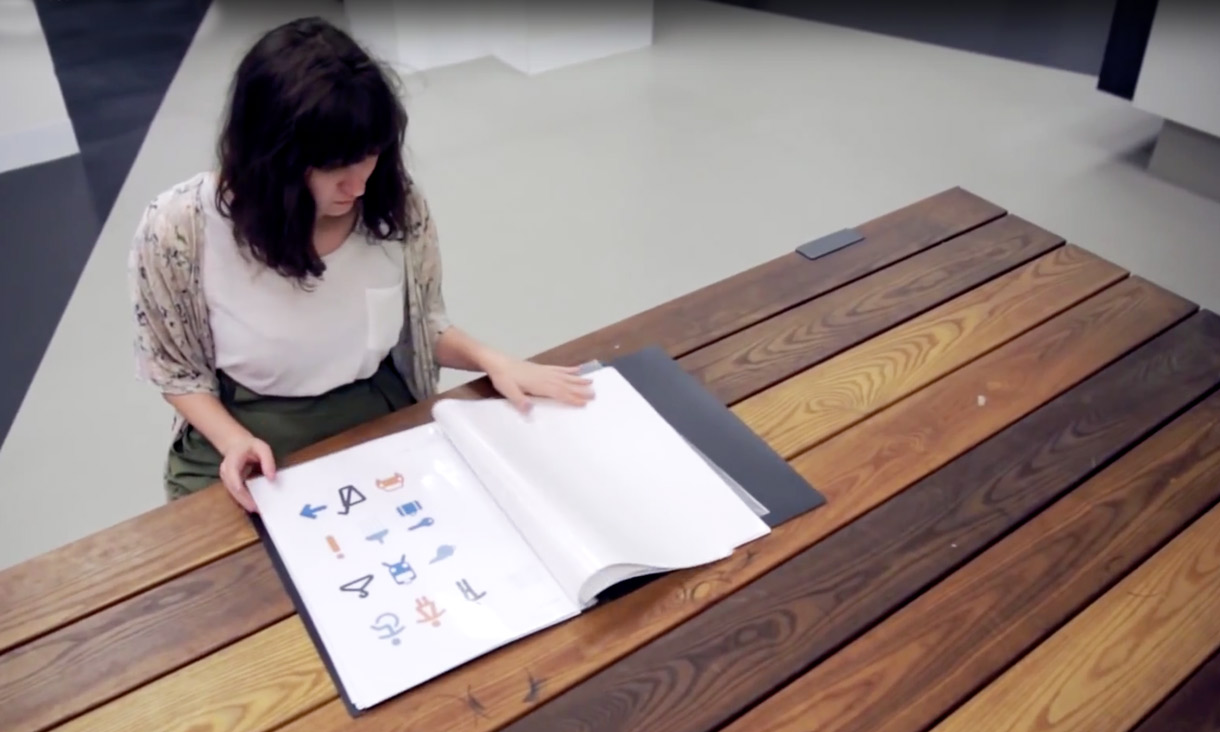
Female student looking at an art folio

Applying for Art and Design courses

Here's some advice for preparing folios and pre-selection kits to help make the process easier.

two students looking at artwork

Art and design selection interviews

Wondering how an art and design selection interview works? Here's everything you need to know.

View the ATAR profile and selection rank from students offered a place into this course wholly or partly on the basis of ATAR in the most relevant recent intake period.

The student profile provides insight into the likely peer group for this course.

*ATAR refers to the lowest selection rank to which an offer was made (including consideration of any adjustments) for current and recent Year 12 applicants.

RMIT is committed to providing transparency to the admissions process. In line with this commitment, we provide you with information that will help in making informed choices about your undergraduate study options. Find out more about admission to RMIT.

You need to satisfy all of the following requirements to be considered for entry into this course.

You must have successfully completed a qualification recognised by RMIT as equivalent to the Victorian Certificate of Education (VCE).

For information on international qualifications and corresponding entry requirements that are equivalent to an Australian Year 12, see the Entry requirements by country web page.

Equivalent qualifications may also include completion of the RMIT Foundation Studies program or a recognised post secondary diploma in the relevant discipline with the required grades.

If you are applying for July intake, you must have successfully completed one of the following within 10 years of the program commencement date:

  • the RMIT Advanced Diploma of Building Design (Architectural) and satisfy the interview requirement

OR

  • a minimum of one year tertiary study comparable to the first year of this program, undertaken in a design discipline (architecture, interior design, industrial design, landscape architecture, graphic design, art or fashion design).
Entry score calculator
Minimum Score Required

Don’t meet the requirements?

ATAR information for international students studying year 12 in Australia

If you are an international student studying year 12 in Australia, you may be able to apply via VTAC with your ATAR.

Find information about the ATAR selection rank* for this course in our ATAR for International students course finder.

*ATAR refers to the lowest selection rank to which an offer was made (including consideration of any adjustments) for current and recent Year 12 applicants.

RMIT is committed to providing transparency to the admissions process. In line with this commitment, we provide you with information that will help in making informed choices about your undergraduate study options. Find out more about admission to RMIT.

There are no prerequisite subjects required for entry into this qualification.

All applicants are required to complete and submit a selection task for this program. See below for full selection task details.

Selection tasks by applicant type

Semester 1, 2026

Selection task dates

The selection task is now closed for Semester 1, 2026.

You must complete and submit the Architectural Design selection task by the following date. Late submissions will not be considered.  

VTAC round Register and submit the selection task by
VTAC international applicants 3 October 2025

Selection task requirements

Design task

The degree is interested in how you interpret, respond to, and reimagine the built environment through design. You will be required to create an original response specifically for this task.

In this task, we encourage you to think broadly and creatively as the selection panel will be assessing your ideas and vision and not your architectural knowledge or skills. You may draw elements from previous projects from coursework such as Visual Communication or Studio Art course, but do not copy them directly.

You should allow approximately 8 hours to complete this task.

The submission of the design task should consist of 4 x A3 landscape pages (to be viewed digitally at full screen) and be merged into a single PDF. Your single PDF file must be named as follows: Design Task_(Your first name)_(Your Surname).pdf.

Please see below the requirements for each page:

Page 1 – You as a designer

We are interested in how your personal interests, experiences, and projects influence your thinking. Whether it’s music, sport, social issues or art, your perspective matters.

Include the following:

  • Visuals such as images, collages, drawings that represent your interests and inspirations. You may include screenshots of books, films and other references.
  • Written reflection (maximum 200 words) describing how these influences shape your approach to design.

Page 2 – Site analysis

  • Select a site, real or imagined, that is interesting to you and has potential to be reconsidered through design. This could be a vacant lot, a section of your neighbourhood, a building, a public space or fictional place.
  • Show how you explored the site – use drawings, maps, photos, notes, collages, or news articles that identify the qualities, characteristics and issues particular to this site.

Page 3 – Design proposal

Reimagine your chosen site and create a design proposal. Instead of providing a conventional response to your site, go beyond practical problem solving towards imaginative and creative proposal. You may consider one of these following prompts to help you develop your ideas for your proposal or you can develop your own prompt/s.

  • What if it was designed for a fictional character?
  • What if it created a new identity for a place?
  • What if it uncovered forgotten histories about a place?
  • What if it changed how people interact with one another?

Include:

  • Title of your design
  • Key image that best captures your proposal. This can be a collage, drawing, or any other kind of visualisation.
  • Design statement (maximum 100 words): What ideas and questions does your design explore? Explain the rationale for your design.

 Page 4 – Additional images and inspiration

  • Additional images of your proposal: drawings, visualisations, collages, or sketches.
  • Inspiration and influences: What influenced your idea? Mention any architecture, media, books, news, or artworks that shaped your thinking.

Usage of Artificial Intelligence (AI) tools

If you have used AI to generate images or texts in your selection task submission, please describe where this occurs and what AI tools were used (maximum 100 words).

Interview (shortlisted applicants)

Shortlisted applicants will be required to attend an interview. Interviews will be held in the first week of December and shortlisted applicants will be advised by late November the date they are required to attend. 

An advisory letter indicating the outcome of your selection task will be sent on 10 December at 5pm.

Art and Design application tips

View the following videos for some practical application advice:

Female student looking at an art folio

Applying for Art and Design courses

Here's some advice for preparing folios and pre-selection kits to help make the process easier.

two students looking at artwork

Art and design selection interviews

Wondering how an art and design selection interview works? Here's everything you need to know.

Semester 1, 2027

Selection task details and submission dates will be available early August 2026.

Selection task: You must submit a completed selection task along with your application.

Interview or folio presentation: If shortlisted, you may be required to attend an interview for first-year applicants or a folio presentation for advanced standing applicants. This can be conducted in person or via video call.

To study this course you will need to complete one of the following English proficiency tests:

  • IELTS (Academic): minimum overall band of 6.5 (with no individual band below 6.0)
  • TOEFL (Internet Based Test - IBT): minimum overall score of 79 (with minimum of 13 in Reading, 12 in Listening, 18 in Speaking and 21 in Writing)
  • Pearson Test of English (Academic) (PTE (A)): minimum score of 58 (with no communication band less than 50)
  • Cambridge English: Advanced (CAE): minimum of 176 with no less than 169 in any component.

Note: RMIT does not accept scores from 'at-home' or 'online' testing.

For detailed information on English language requirements and other proficiency tests recognised by RMIT, visit English language requirements and equivalency information.

Don't meet the English language test scores? Complete an English for Academic Purposes (EAP) Advanced Plus at RMIT University Pathways (RMIT UP).

Pathways and further study

A pathway is an alternative way to get into a course. RMIT's pathways can help you move through different levels of study to reach the qualification you're aiming for, even if you don't meet the requirements for your destination course.

Pathways into the Bachelor of Architectural Design

This course has pathways available.

Further study

When you successfully complete this degree, you may be eligible for entry into an RMIT Postgraduate degree.

You can gain entry to this degree from RMIT Foundation Studies or a range of vocational study courses.

When you successfully complete the Bachelor of Architectural Design and achieve a minimum GPA of 2.5, you are guaranteed entry into the Master of Architecture. If you achieve below the minimum GPA, you may still apply and will need to attend an interview. You will be assessed on a case by case basis.

Alternatively, you may be eligible for entry into other RMIT honours or postgraduate degrees.

Credit and recognition of prior learning

Credit, recognition of prior learning, professional experience and accreditation from a professional body can reduce the duration of your study by acknowledging your earlier, relevant experience.

Credit and exemptions will be assessed consistent with the principles of the RMIT Credit Policy.

Credit may reduce the duration of your study by acknowledging your earlier, relevant study experience.

When you are submitting an application, please indicate that you want to be considered for credit and provide detailed course syllabus (also known as course outline), outlining volume of learning, course content and weekly topics, learning objectives/outcomes, assessment types and their weightings, and reference to the learning resources such as prescribed textbooks and recommended readings.

Fees

2026 indicative fees

In 2026, the annual student contribution amount (tuition fee) you will pay for a standard year of full-time study is between AU$4,738 to AU$17,399.

Additional expenses

  • Student services and amenities fee (SSAF): AU$373 maximum fee for 2026.
  • Other items related to your program, including field trips, textbooks and equipment.

Annual fee adjustment

Amounts quoted are indicative fees per annum, and are based on a standard year of full-time study (96 credit points). A proportionate fee applies for more or less than the full-time study load.

Fees are adjusted on an annual basis and these fees should only be used as a guide.

Defer your payment

You may be eligible to apply for a HECS-HELP loan, which can be used to defer payment of up to the full amount of your student contribution fees. You may also be eligible to apply to defer payment of your SSAF through the SA-HELP loan scheme.

Learn more about fees for undergraduate study.

Paying your fees and applying for refunds

For information on how to pay your fees or how to apply for a refund, please see Paying your fees and applying for refunds.

If you are offered a Commonwealth supported place, your tuition fees are subsidised by the Australian Government.

Your share of the fee (student contribution) is set on an annual basis by the government and is determined by the discipline areas (bands) of your individual enrolled courses, not the overall program.

How much can I expect to pay for my Commonwealth supported place?

The Australian Government has introduced changes to university funding and student contribution fees under its Job-ready Graduates Package

The fees in the table below apply to students who commence their program in 2026. Fees for continuing students are available at fees for Commonwealth supported students.

Each course (subject) falls into a band. The band determines the student contribution amount for the course.

Amounts listed in the table below are based on a standard, full-time study load (96 credit points per year) with all courses in the same band. A proportionate fee applies for more or less than the full-time study load or for enrolment in courses (subjects) from a combination of bands.

You can learn how to calculate your exact tuition fees for units from different bands at Fees for Commonwealth supported students.

Maximum student contribution amount for Commonwealth supported places in 2026 for commencing students

Student contribution band by course (subject)

Maximum annual student contribution amount (per EFTSL) in 2026

Education, Postgraduate Clinical Psychology, English, Mathematics, Statistics, Nursing, Indigenous and Foreign Languages, Agriculture $4,738 per standard year
$592 per standard (12 credit point) course
Allied Health, Other Health, Built Environment, Computing, Visual and Performing Arts, Professional Pathway Psychology, Professional Pathway Social Work, Engineering, Surveying, Environmental Studies, Science, Pathology $9,537 per standard year
$1,192 per standard (12 credit point) course
Dentistry, Medicine, Veterinary Science $13,558 per standard year
$1,694 per standard (12 credit point) course
Law, Accounting, Administration, Economics, Commerce, Communications, Society and Culture $17,399 per standard year
$2,174 per standard (12 credit point) course

Student Learning Entitlement

On 1 January 2022, the Government implemented the Student Learning Entitlement (SLE).

  • The SLE allows students 7 years of full-time subsidised study in Commonwealth Supported Places (CSP).
  • Your total SLE amount will be reduced in accordance with your overall study load in a CSP. 
  • Once you have utilised all your SLE, you can no longer study in a CSP.

HECS-HELP Loans

The Australian Government provides financial assistance via the HECS-HELP loan scheme, which allows eligible students (such as Australian citizens or holders of an Australian permanent humanitarian visa) to defer payment of up to the full amount of their student contribution.

SA-HELP Loans

You may be eligible to apply to defer payment of the Student services and amenities fee (SSAF) through the SA-HELP loan scheme. If you use SA-HELP, the amount will be added to your accumulated HELP debt.

How does a HELP loan work?

If your FEE-HELP and/or SA-HELP loan application is successful, the Australian Government will pay RMIT, on your behalf, up to 100% of your fees. This amount will become part of your accumulated HELP debt.

You only start repaying your accumulated HELP debt to the Australian Government once you earn above the minimum income threshold for repayment, which is set each year by the Australian Government (this also applies if you are still studying). The Australian Taxation Office (ATO) will calculate your compulsory repayment for the year and include this on your income tax notice.

For more information about loan repayment options see Commonwealth assistance (HELP loans) or Study Assist.

In addition to tuition fees, you will be charged an annual student services and amenities fee (SSAF), which is used to maintain and enhance services and amenities that improve your experience as an RMIT student.

The SSAF is calculated based on your enrolment load and the maximum fee for 2026 is $373.

You may also be required to purchase other items related to your course, including field trips, textbooks and equipment. These additional fees and expenses vary from course to course.

In addition to tuition fees you also need to pay for:

You also need to account for your living expenses. Estimate the cost of living in Melbourne.

Student services and amenities fee (SSAF)

In addition to tuition fees, you will be charged an annual student services and amenities fee (SSAF), which is used to maintain and enhance services and amenities that improve your experience as an RMIT student.

The SSAF is calculated based on your enrolment load and the maximum fee for 2026 is $373. 

Find out more details about how fees are calculated and the expected annual increase.

Applying for refunds

Find information on how to apply for a refund as a continuing international student.

Scholarships

Check your eligibility for a scholarship

RMIT awards more than 2000 scholarships every year to recognise academic achievement and assist students from a variety of backgrounds.

Check your eligibility for a scholarship

RMIT awards more than 2000 scholarships every year to recognise academic achievement and assist students from a variety of backgrounds.

Frequently Asked Questions (FAQs)

Looking for answers or more general information?

Use our Frequently Asked Questions to learn about the application process and its equity access schemes, find out how to accept or defer your offer or request a leave of absence, discover information about your fees, refunds and scholarships, and explore the various student support and advocacy services, as well as how to find out more about your preferred program, and more.

aboriginal flag float-start torres strait flag float-start

Acknowledgement of Country

RMIT University acknowledges the people of the Woi wurrung and Boon wurrung language groups of the eastern Kulin Nation on whose unceded lands we conduct the business of the University. RMIT University respectfully acknowledges their Ancestors and Elders, past and present. RMIT also acknowledges the Traditional Custodians and their Ancestors of the lands and waters across Australia where we conduct our business - Artwork 'Sentient' by Hollie Johnson, Gunaikurnai and Monero Ngarigo.

More information