Bachelor of Applied Science (Medical Radiations)
Student type:
Quick facts
-
Entry score
-
Duration
Full-time 3.5 years -
Location
Bundoora -
Fees
Next intake
FebruaryEntry score
Not applicable
Duration
Not applicable
Location
Not applicable
Overview
What you will study
Tailor your study with course streams in medical imaging, nuclear medicine and radiation therapy.
Your career in medical radiations
Medical radiations graduates work as skilled practitioners in the healthcare sector. They specialise as nuclear medicine technologists, radiation therapists, or diagnostic radiographers.
Details
Medical radiations is a rapidly advancing healthcare discipline involving the application of ionising and non-ionising radiation for the diagnosis and treatment of injury and disease.
RMIT has a multidisciplinary approach to medical radiations, with the option to study all medical radiations disciplines at degree level.
Areas of specialisation include nuclear medicine, medical imaging and radiation therapy with a focus on supervised clinical practice to ensure you're job-ready.
Specialised streams
This program allows you to enrol directly into one of three specialised streams:
Medical imaging
Through medical images such as x-rays, MRI, and ultrasound, radiographers assist in the diagnosis and care of patients. This program combines knowledge of physical and biomedical sciences with technical expertise and patient care.
Nuclear medicine
Nuclear medicine uses very small amounts of radioactive materials to diagnose and treat disease. Common nuclear medicine applications include cardiac stress tests to analyse heart function, bone scans for orthopaedic injuries, and lung scans for blood clots.
Radiation therapy
Radiation therapy is one of the main treatment options for patients diagnosed with cancer, and contributes to the high cancer cure rates in Australia. Radiation therapists combine knowledge of the physical and biomedical sciences in order to design and verify appropriate treatment plans, as well as conduct research.
Clinical practice is a major focus of this program. You’ll undertake work placement in each year of the degree, spending a total of 22 weeks of the three-year degree in supervised clinical practice, making you work-ready upon graduation.
You’ll gain experience in a range of clinical settings including large public teaching hospitals, small private practices, as well as metropolitan and rural centres.
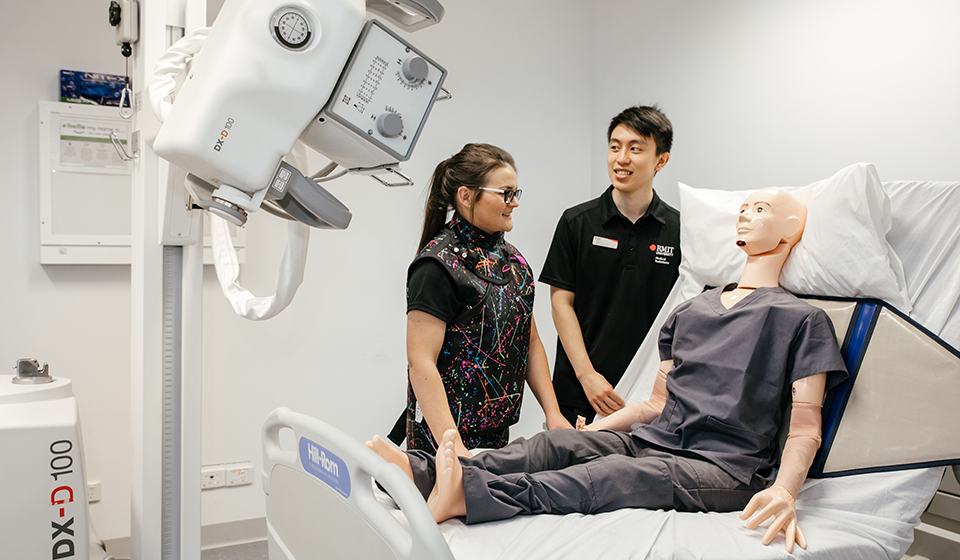
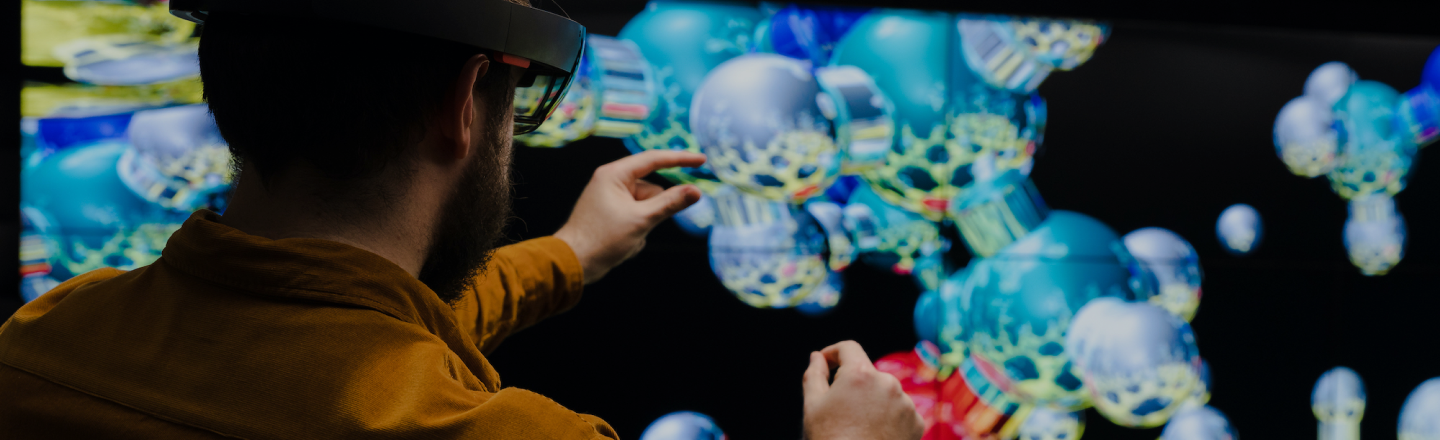
You'll study in facilities with the latest medical radiations and IT equipment. This includes a VERT - Virtual Environment of Radiation Treatment Room. Through captivating 3D views and life-size visualisations, VERT offers radiation therapy students a unique platform in which to learn.
The program is taught by professionals with current research and industry experience.
Learning and teaching approaches include lectures, seminars, workshops, presentations and group discussion work.
Inside the course experience
Students from each stream describe their experience.
Year 1
You'll study a general introduction to the practice and physical principles of clinical nuclear medicine, radiation therapy, and medical imaging.
Common courses include anatomy and physiology, technology and physics of medical radiations, and an introduction to research and the professional streams of medical radiations practice.
The second semester courses focus on your area of specialisation and you’ll undertake your first clinical placement.
Years 2 and 3
You'll specialise in your chosen discipline (stream).
Common learning modules are also studied and these include imaging anatomy, pathology, hospital law and ethics, psychology and advanced medical physics, and instrumentation.
The third year is designed to explore the complementary nature of the medical radiations disciplines. You’ll examine techniques and case studies that highlight the multidisciplinary approach to diagnosis and treatment. You'll also learn the specialised areas of CT, MRI and ultrasound.
You’ll also undertake more interdisciplinary learning to further enhance your understanding of the other professions (streams).
Choose a program structure
Program code: BP321
Career
Our medical radiations graduates work as skilled practitioners in the healthcare sector. They specialise as nuclear medicine technologists, radiation therapists, or diagnostic radiographers.
Medical imaging
Radiography or medical imaging includes X-rays, CT scans, digital subtraction angiography, MRI and ultrasound.
Radiographers use medical imaging techniques to help diagnose and manage disease or injuries. They combine knowledge of physical and biomedical sciences with technical expertise and patient care.
Nuclear medicine
Nuclear medicine uses very small amounts of radioactive materials (radiopharmaceuticals) to diagnose changes in the body and treat disease.
Radiopharmaceuticals are detected using special cameras (gamma camera technology and positron emission tomography) that work with computers to provide images. During treatment, the radiopharmaceuticals go directly to the organ being treated.
Nuclear medicine technologists work closely with patients and other health professionals in the treatment of disease. They carry out tests, which may include cardiac stress tests to analyse heart function, bone scans for orthopaedic injuries and lung scans for blood clots.
Radiation therapy
Radiation therapy is one of the main treatment options for patients diagnosed with cancer.
Radiation therapists work closely with doctors to design, plan and administer radiation treatment for cancer patients. They use highly sophisticated equipment to work out the dose required for each patient and then deliver the treatment to their patients.
Career outlook
Graduates are employed in either the public or private healthcare sectors as:
- nuclear medicine technologists;
- radiation therapists;
- or diagnostic radiographers.
Graduates can undertake further study in the specialist fields of MRI, CT, ultrasound, position emission topography (PET), and specialist areas in radiation therapy.
The Accreditation Committee of the Medical Radiation Practice Board of Australia (MRPBA) has advised that it will assess this new program for accreditation during 2020, when the first student cohort is in second year.
Graduates of MRPBA-accredited programs are eligible to apply for registration through the MRPBA – further details on this are available from the MRPBA and AHPRA websites.
Admissions
*ATAR refers to the lowest selection rank to which an offer was made (including consideration of any adjustments).
ATAR selection ranks plus adjustment factors for each stream are as follows:
- Bachelor of Applied Science (Medical Radiations) (Nuclear Medicine) 82.55
- Bachelor of Applied Science (Medical Radiations) (Radiation Therapy) 87.70
- Bachelor of Applied Science (Medical Radiations) (Medical Imaging - Radiography) 94.55
RMIT is committed to providing transparency to the admissions process. In line with this commitment, we provide you with information that will help in making informed choices about your undergraduate study options.
RMIT admits students from a range of educational pathways, including Year 12 results, previous higher education or vocational education study, work experience, and for some programs - interviews, auditions or portfolios.
Gain a better understanding of the Admission criteria for this program by viewing RMIT’s Admission information.
*ATAR refers to the lowest selection rank to which an offer was made (including consideration of any adjustments).
ATAR selection ranks plus adjustment factors for each stream are as follows:
- Bachelor of Applied Science (Medical Radiations) (Nuclear Medicine) 82.55
- Bachelor of Applied Science (Medical Radiations) (Radiation Therapy) 87.70
- Bachelor of Applied Science (Medical Radiations) (Medical Imaging - Radiography) 94.55
The highest level of education you have previously completed will determine which category applies to you.
Entry to this program is competitive. Applicants are ranked and selected in order of merit based on their academic achievement, e.g., ATAR or GPA (including any adjustments).
Applicants with recent secondary education (current or within the past two years)
Successful completion of an Australian Year 12 senior secondary certificate of education or equivalent in 2016, 2017 or 2018. If applicable, this includes equity access schemes and any other adjustment factors.
School Network Access Program (SNAP)
The SNAP access scheme is designed to increase tertiary access and participation of eligible students from SNAP partner schools.
Applicants with Vocational Education and Training study
Satisfactory completion of an Australian Certificate IV or above or equivalent.
Applicants with Higher Education study
Satisfactory completion of at least four courses (subjects) at an Australian undergraduate level or overseas equivalent.
Applicants with Work and Life Experience
Satisfactory completion of an Australian Year 12 senior secondary certificate of education or equivalent more then two years ago.
You must sit the Special Tertiary Admissions Test (STAT) Multiple Choice if:
- You have no prior Year 12, VET qualifications, HE results or relevant work experience that meet the minimum entry requirements for the program; and
- You are 19 years of age or over (as of 1 Jan 2019) and have not enrolled in secondary studies for at least two years.
The STAT Multiple Choice will satisfy Year 12 English and Year 11 Mathematics prerequisites. Applicants must meet all other prerequisites or equivalents. Learn more about RMIT STAT results.
Radiation Therapy and Medical Imaging
VCE Units 1 and 2: satisfactory completion in one of Biology or Chemistry or Units 3 and 4: one of Biology or Chemistry; Units 3 and 4: a study score of at least 30 in English (EAL) or at least 25 in English other than EAL; Units 3 and 4: a study score of at least 20 in one of Maths: Mathematical Methods or Maths: Specialist Mathematics.
Nuclear Medicine
VCE Units 3 and 4: a study score of at least 30 in English (EAL) or at least 25 in English other than EAL; Units 3 and 4: a study score of at least 20 in one of Maths: Mathematical Methods or Maths: Specialist Mathematics; Units 3 and 4: a study score of at least 20 in Chemistry.
You must have successfully completed an Australian Year 12 or an equivalent senior secondary school qualification with a minimum average of 65% (see calculator below).
Equivalent qualifications may also include completion of the RMIT Foundation Studies program or a recognised post secondary diploma in the relevant discipline with the required grades.
Meeting the minimum academic requirements does not guarantee entry. Your application will still need to be assessed and accepted.
Medical Imaging and Radiation Therapy streams
Higher Mathematics & Biology or Chemistry; or
VCE Units 1 and 2 or 3 and 4 in Chemistry or Biology and VCE Units 3 and 4 in Mathematical Methods (CAS) or Specialist Mathematics, with a study score of at least 20.
Nuclear Medicine stream
Higher Mathematics and Chemistry
VCE Units 3 and 4 in Mathematical Methods (CAS) or Specialist Mathematics and Chemistry, with a study score of at least 20.
To study this program you will need to complete one of the following English proficiency tests:
- IELTS (Academic): minimum overall band of 7.0 (with no individual band below 6.5)
- TOEFL (Paper Based Test): minimum score of 600 (TWE 5.0)
- TOEFL (Internet Based Test - IBT): minimum overall score of 100 (with minimum of 24 in writing and 22 in all other sections)
- Pearson Test of English (Academic) (PTE (A)): minimum score of 65 (with no communication band less than 58)
- Cambridge English: Advanced (CAE): minimum of 185 with no less than 176 in any component
For detailed information on English language requirements and other proficiency tests recognised by RMIT, visit English language requirements and equivalency information.
Don't meet the English language test scores? Complete an Advanced Plus Certificate at RMIT English Worldwide.
Registration
Prior to undertaking clinical placement, you may be required to gain student registration with the Medical Radiation Practice Board of Australia (MRPBA).
Special Entry Access Scheme (SEAS) /RMIT Access
This is a gender underrepresented program and awards bonus points to male applicants. To be eligible you must submit a SEAS/RMIT Access application and complete category 1.
Aboriginal and Torres Strait Islander peoples
The Indigenous Access Program will support your application into RMIT programs through an informal interview process with support from the Ngarara Willim Centre. Your relevant life, work, educational and training experience as preparation for study, in addition to any formal qualifications, are all considered.
Elite Athlete Program
The RMIT Elite Athlete Program (REAP) supports elite athlete and emerging athletes to achieve sporting and academic excellence.
Students who are successful in obtaining a place in the program must meet a number of Immunisation and Compliance requirements upon commencement of their studies in the program.
Immunisations and vaccination requirements
- Diphtheria/Tetanus/Pertussis (dTpa – Adult Dose). Must be this immunisation NOT ADT (Adult Diphtheria/Tetanus – does not contain the pertussis component).
- Poliomyelitis: Primary course of 3 vaccination doses.
- Measles/Mumps/Rubella (MMR, 2 vaccination doses AND blood test (serology report) to confirm immunity.
- Hepatitis A: Primary course of 2 vaccination doses OR serology to show immunity to Hep A Ab.
- Hepatitis B: Primary course of 3 vaccination doses AND serology to confirm anti-HBV level is greater than or equal to 10mIU/ml.
- Varicella: 2 vaccination doses OR blood test (serology report) to confirm immunity OR history of chickenpox
- Influenza Vaccination: Annual requirement.
- Tuberculin Screen: Tuberculin Skin Test OR Quantiferon TB Assay blood test (serology) to show immunity. This is an annual requirement for the duration of your study.
PLEASE NOTE: A full course of immunisations can take up to 7 months to complete and students should contact their Medical Practitioner prior to entering the program to commence immunisations. It is a requirement that students will have commenced all immunisations and will continue to progress this until completion of the vaccination courses by the deadlines set by the University.
Compliance requirements
- Police Check: Students must present evidence of a successful National Police Records Check prior to undertaking the clinical components of this program (Annual requirement for the duration of your Program). National Police records check are conducted via fit2work. An account with fit2work will be created using the student’s name and the RMIT issued student email address, once studies in the program have commenced. Further information will be provided once enrolment has been completed.
- Working with Children Check (valid for 5 years): Students must hold a valid Working with Children Check prior to undertaking the clinical components of this program.
- First Aid: Students must have a first aid certificate prior to undertaking the clinical components of this program.
For more information or if you have any questions about these requirements please email SHBS.wil@rmit.edu.au.
The following information outlines the tasks you will be required to undertake during professional experience placement and on-campus learning activities.
The non-academic abilities listed are provided for your information only and are not entry requirements.
If there are any activities outlined which may be difficult for you to undertake, there are a range of adjustments to your study conditions available to enable and support you to demonstrate these abilities. Please contact the Equitable Learning Service to discuss any adjustments you may require.
The following information outlines the tasks you will be required to undertake during professional experience placement and on-campus learning activities.
The non-academic abilities listed are provided for your information only and are not entry requirements.
If there are any activities outlined which may be difficult for you to undertake, there are a range of adjustments to your study conditions available to enable and support you to demonstrate these abilities. Please contact the Equitable Learning Service to discuss any adjustments you may require.
By understanding the types of activities you’ll participate in, you can:
- understand more about the program
- determine if you may need support during your studies
- make an informed decision about whether the program is suitable for you
If you are living with disability, long-term illness and/or a mental health condition, we can support you by making adjustments to activities in your program so that you can participate fully in your studies.
To receive learning adjustments, you need to register with Equitable Learning Service
The University considers the wellbeing and safety of all students, staff and the community to be a priority in academic and professional experience placement settings.
Pathways
When you successfully complete the Bachelor of Applied Science (Medical Radiations) you may be eligible for entry to the Bachelor of Biomedical Science (Honours).
Alternatively, you may be eligible for entry to other RMIT honours or postgraduate programs.
Fees
In 2019, the annual student contribution amount (tuition fee) you will pay for a standard year of full-time study is between AU$6,566 to AU$10,958*.
* Amounts quoted are indicative fees per annum, and are based on a standard year of full-time study (96 credit points). A proportionate fee applies for more or less than the full-time study load.
Additional expenses
Student services and amenities fee (SSAF): AU$303 maximum fee for 2019.
Other items related to your program, including field trips, textbooks and equipment.
Fees are adjusted on an annual basis and these fees should only be used as a guide.
Learn more about fees for undergraduate study.
Defer your payment
You may be eligible to apply for a HECS-HELP loan, which can be used to defer payment of up to the full amount of your student contribution fees. You may also be eligible to apply to defer payment of your SSAF through the SA-HELP loan scheme.
All undergraduate and honours degrees have Commonwealth supported places (CSP) available. In 2019, the annual student contribution amount (tuition fee) you will pay for a standard year of full-time study is between AU$6,566 to AU$10,958.
In a CSP, your tuition fees are subsidised by the Australian Government. Your share of the fee (student contribution) is set each year by the Australian Government and is determined by the discipline areas (bands) of the courses in which you enrol, not the overall program.
How much can I expect to pay for my Commonwealth supported place?
Courses (subjects) fall into one of three bands. The band determines the student contribution amount for the course.
Amounts listed in the table below are based on a standard, full-time study load (96 credit points per year) with all courses in the same band. A proportionate fee applies for more or less than the full-time study load or for enrolment in courses (subjects) from a combination of bands.
You can learn how to calculate your exact tuition fees for units from different bands at fees for Commonwealth supported students.
Maximum student contribution amount for Commonwealth supported places in 2019
Student contribution band by course (subject) |
Maximum annual student contribution amount in 2019 |
Band 1: humanities, behavioural science, social studies, clinical psychology, foreign languages, visual and performing arts, education, nursing |
$6,566 per standard year |
Band 2: mathematics, statistics, computing, built environment, other health, allied health, science, engineering, surveying, agriculture |
$9,359 per standard year |
|
$10,958 per standard year |
HECS-HELP Loans
The Australian Government provides financial assistance via the HECS-HELP loan scheme, which allows eligible students (such as Australian citizens or holders of an Australian permanent humanitarian visa) to defer payment of up to the full amount of their student contribution.
SA-HELP Loans
You may be eligible to apply to defer payment of the Student services and amenities fee (SSAF) through the SA-HELP loan scheme. If you use SA-HELP, the amount will be added to your accumulated HELP debt.
How does a HELP loan work?
If your HECS-HELP and/or SA-HELP loan application is successful, the Australian Government will pay RMIT, on your behalf, up to the full amount of your fees. This amount will become part of your accumulated HELP debt.
You will only start repaying your accumulated HELP debt to the Australian Government once you earn above the minimum income threshold for repayment, which is set each year by the Australian Government (this also applies if you are still studying).
The Australian Taxation Office (ATO) will calculate your compulsory repayment for the year and include this on your income tax notice.
For more information about loan repayment options see Commonwealth assistance (HELP loans) or Study Assist.
In addition to tuition fees, you will be charged an annual student services and amenities fee (SSAF), which is used to maintain and enhance services and amenities that improve your experience as an RMIT student.
The SSAF is calculated based on your enrolment load and the maximum fee for 2019 is $303.
For more information about calculating your actual SSAF see Paying SSAF.
You may also be required to purchase other items related to your program, including field trips, textbooks and equipment. These additional fees and expenses vary from program to program.
The annual tuition fee for 2019 is AU$36,480.
The total indicative tuition fee for 2019 commencement is AU$112,320.
In addition to tuition fees you also need to pay for:
- Student services and amenities fee (SSAF) in each calendar year.
- Overseas Student Health Cover (OSHC) - Student visa holders must have cover for the total duration of their visa.
- Some programs incur additional expenses.
You also need to account for your living expenses. Estimate the cost of living in Melbourne.